
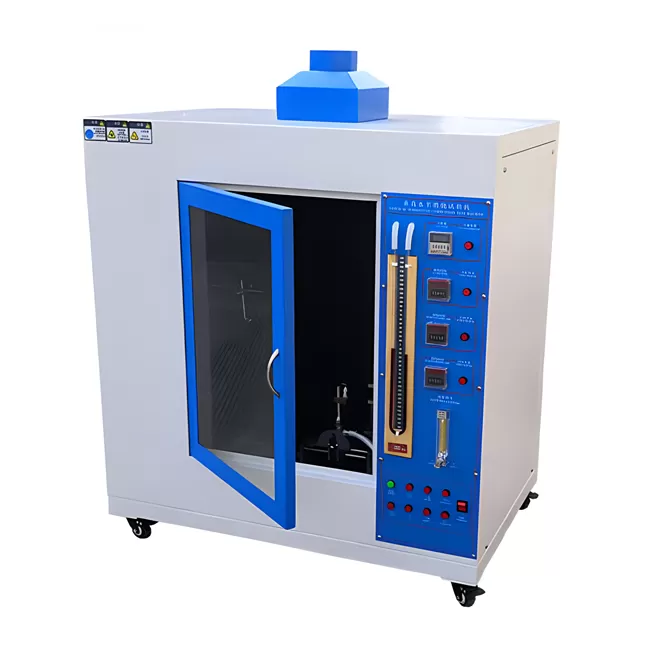
Procuring laboratory equipment requires balancing immediate budgets against long-term compliance risks. A fire testing chamber is not simply a metal box with a burner; it is a critical gatekeeper for material compliance, product safety, and brand reputation.
Whether qualifying polymers for consumer electronics or verifying thermal barriers for electric vehicle battery packs, your flammability test apparatus must produce repeatable data while withstanding aggressive degradation. Leading test apparatus manufacturers like HAOEN build their instrumentation around these strict testing demands.
This technical procurement guide outlines the seven operational and economic criteria you must assess before investing in new fire testing equipment for 2026 and beyond.
1. Multi-Standard Adaptability and Future Regulatory Headroom
Global regulatory bodies update fire safety protocols rapidly. Specifying an instrument dedicated to a single standard often leads to premature obsolescence when testing mandates shift. Your chamber must adapt easily across multiple regimes.
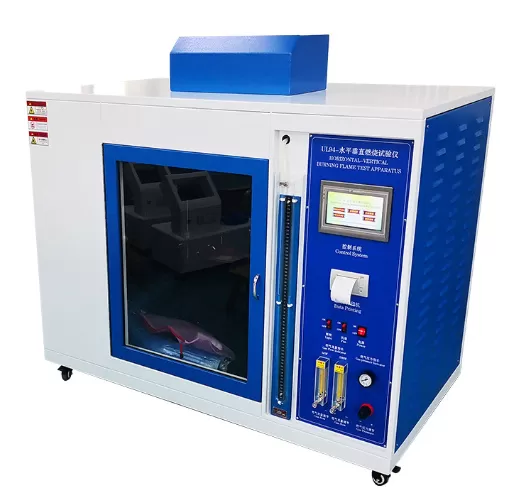
Modern plastics testing requires compliance with UL 94 (vertical and horizontal burning), ASTM D635, and ISO 1210. Simultaneously, building interior products demand adherence to ASTM E84 or regional building codes like EN 13501-1. Investing in dedicated machinery for every standard inflates capital expenditure and wastes valuable bench space.
Modular mounting: Verify that the burner carriage and sample holding frame swap out without specialized tools.
Regulatory readiness: Assess the unit against upcoming 2026 ecodesign directives, which place tighter fire-retardant scrutiny on halogen-free plastics and bio-based resins.
EV and energy storage demands: Ensure the apparatus can accommodate high-heat-release composites and flame-barrier sheets now required by the automotive sector.
Modular systems let technicians switch from a UL 94 horizontal burn configuration to a wire-and-cable vertical test array within minutes. This versatility protects your initial capital outlay as industry standards change.
2. Sensor Precision and Internal Fluid Dynamics
Test reproducibility determines whether an R&D batch moves to production or gets rejected by quality control. The largest source of measurement divergence between testing labs is uncalibrated flame dynamics and unstable airflow inside the burn zone.
A high-performance flammability test apparatus eliminates user variation through automated gas delivery and stable thermal sensors. Relying on basic rotameters for gas flow is no longer sufficient for modern quality verification.
Mass Flow Controllers (MFC): Electronic MFCs guarantee exact gas flow rates for methane, propane, or butane regardless of ambient line pressure drops.
Calibrated flame verification: Look for built-in copper slug thermocouples to verify the exact thermal output of the flame before running sample sets.
Chamber draft stabilization: The combustion space must maintain an airtight, draft-free baseline during the burn phase, yet supply steady stoichiometric oxygen without creating localized turbulence.
Parametric gas sensors: For oxygen index (LOI) assessments, insist on paramagnetic oxygen sensors rather than cheaper electrochemical cells, which degrade rapidly and drift over time.
When flame height and heat flux remain consistent, your test repeatability improves dramatically, eliminating costly discrepancies between your internal QA findings and third-party certification labs.
3. Automated Timing, Optical Tracking, and Data Integrity
Manual timing with hand-held stopwatches introduces clear human error into flammability assessments. An operator reacting half a second late during an after-flame observation can incorrectly shift a V-0 rating down to a V-1 classification.
Leading manufacturers now replace human visual guesswork with integrated sensor technology. Optical pyrometers and dual infrared flame monitors determine ignition, flame persistence, and afterglow duration with millisecond accuracy.
Software Architecture and LIMS Integration
In modern production environments, closed-loop data tracking is a strict regulatory requirement. Standalone testers that print results on receipt paper introduce security risks and data management headaches.
Choose software suites featuring multi-level user authentication and audit trails compliant with industrial electronic record requirements.
Confirm direct REST API or MQTT interfaces to feed raw test figures, ambient conditions, and failure metrics straight into your Laboratory Information Management System (LIMS).
Demand high-resolution video capture synchronization, enabling technicians to archive and review burning drop behaviors alongside recorded thermal curves.
Eliminating manual data transcription keeps your audit records clean and ensures every certified resin lot carries fully traceable validation documentation.
4. Metallurgical Resilience Against Halogen Acid Attack
Testing flame-retardant polymers generates an extremely corrosive internal environment. When treated materials combust, they liberate hydrogen chloride, hydrogen bromide, and sulfur dioxide. These gases turn into concentrated acids the moment they mix with ambient air moisture.
A budget flammability test apparatus constructed with lower-grade steel will show pitting corrosion along interior seams within six months of routine use. This degradation damages internal seals, seizes motor-driven burner tracks, and contaminates the testing space.
Grade 316L Stainless Steel: Insist on 316L stainless steel for all internal walls, exhaust plenums, and structural mounts. Standard 304 steel fails prematurely under prolonged exposure to halogenated byproducts.
PTFE and ceramic shielding: Critical cable lines, motor linkages, and burner feed lines must use PTFE sleeving or high-temperature fluoropolymer gaskets.
Observation optics: Inspection windows must use reinforced borosilicate or quartz glass to resist chemical etching and thermal shock from accidental sample contact.
Companies like HAOEN engineer their structural envelopes with these anti-corrosive defenses, allowing test centers to process aggressive flame-retardant compounds day after day without risking equipment failure.
5. Environmental Health and Safety (EHS) Engineering
Worker safety is critical when deliberately setting industrial compounds on fire inside an analytical lab. Toxic smoke emissions, hazardous gas accumulations, and open flames demand layered hardware safety interlocks.
Modern compliance policies strictly prohibit equipment that vents unfiltered byproducts into laboratory spaces or lacks automatic shut-off systems during unexpected power cuts or operator lapses.
Automated gas isolation: Gas feed lines must incorporate normally closed solenoid valves that snap shut instantly if flame-out sensors, power monitors, or gas leak detectors trip.
Active draft scavengers: The post-test exhaust motor must clear the chamber volume entirely within a set time window before pneumatic door interlocks release for sample access.
Explosion-relief design: Chambers require rear-facing blowout panels designed to direct sudden overpressure events away from the working technician.
Integrated suppression: Advanced installations feature internal dry-powder or CO2 fire suppression systems that deploy automatically if burning droplets ignite floor scrap trays.
Prioritizing built-in safety mechanisms minimizes liability, protects lab technicians from carcinogenic fumes, and keeps your facility aligned with international EHS protocols.
6. Ergonomic Handling and Clamping Adaptability
Laboratory productivity drops when technicians spend fifteen minutes securing an irregular composite sample into an awkward, poorly designed mechanical clamp. If your lab handles hundreds of evaluations weekly, ergonomic design directly dictates your overall turnaround time.
Evaluate the internal workspace geometry thoroughly. Technicians must be able to load test pieces, clean scrap drawers, and wipe down internal surfaces comfortably without straining.
Quick-release universal grips: Clamp assemblies must support varying geometries, from fragile 0.05 mm thin films to 20 mm thick architectural foam panels, without requiring custom fabrication.
Motorized multi-axis repositioning: Precision joysticks or automated touch-screen commands should control burner positioning, avoiding imprecise hand-wheel adjustments.
Removable waste receivers: High-capacity drip trays coated with non-stick finishes allow technicians to collect, weigh, and dispose of dripping plastic debris in seconds.
By streamlining physical adjustments and sample loading steps, labs maximize daily throughput and keep technicians focused on analyzing data rather than wrestling with mounting hardware.
7. Total Cost of Ownership (TCO) and Lifecycle Maintenance
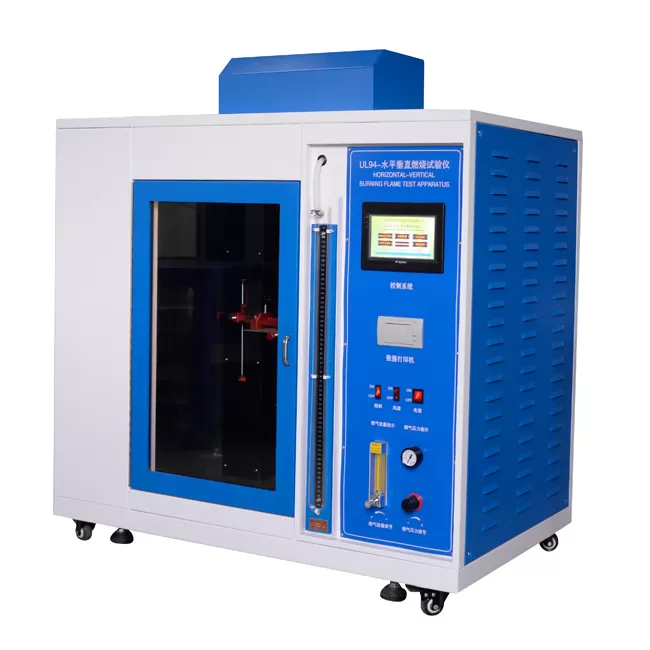
The upfront purchase price of a flammability test apparatus accounts for only a fraction of its true operational cost over a seven-to-ten-year lifecycle. Unexpected service calls, proprietary consumables, and prolonged calibration shutdowns run up substantial expenses over time.
Smart procurement teams evaluate operational costs and vendor reliability just as rigorously as hardware specifications.
On-site field calibration routines: Choose equipment that features simple calibration routines using traceable reference standards, cutting down your dependence on factory visits.
Universal sensor integration: Check if replacement sensors, thermocouples, and burner nozzles are non-proprietary parts you can source through regional supply networks.
Remote troubleshooting tools: Modern controllers should support remote diagnostic checks over secure LAN lines, helping support engineers diagnose firmware or hardware glitches without waiting for an on-site service call.
Review the manufacturer's spare parts supply chain before signing a procurement contract. Reliable equipment brands, including HAOEN, stock critical replacement parts worldwide, preventing extended production delays when a wear component needs replacement.
Summary Assessment Matrix
Before issuing an RFP or evaluating vendor quotations, use this quick checklist to benchmark prospective flammability test units:
Does the core chamber adapt to both vertical and horizontal test protocols without requiring secondary housing purchases?
Are mass flow controllers standard, ensuring precision control over incoming fuel supplies?
Is the internal structure built from acid-resistant 316L stainless steel rather than standard painted alloys?
Can the test software push completed burn analytics into your local LIMS database automatically?
Does the vendor maintain local service hubs capable of shipping consumable wear items within 48 hours?
Frequently Asked Questions (FAQ)
Q1: What is the difference between a UL 94 test apparatus and a cone
calorimeter?
A1: A UL 94 flammability test apparatus measures the
ignition resistance, flame spread rate, and dripping characteristics of plastic
specimens exposed to a direct small-scale flame. A cone calorimeter operates on
the oxygen consumption principle to measure advanced fire properties, including
dynamic Heat Release Rate (HRR), smoke toxicity, mass loss rate, and carbon
monoxide generation under calibrated radiant heat loads.
Q2: How often should an analytical flammability test apparatus be
calibrated?
A2: Critical parameters like burner gas flow rates,
copper slug thermal profiles, and oxygen sensor responsiveness require
verification every 6 to 12 months, depending on test frequency. Furthermore, run
a brief flame calibration check using reference thermocouples at the start of
every extensive testing campaign to catch any gas pressure changes or burner
clogs early.
Q3: Can a single chamber execute both horizontal and vertical test
protocols?
A3: Yes, multi-configuration chambers support both
configurations. You can adjust the burner carriage to standard 20°, 45°, or 90°
angles and switch out specimen clamping arms to transition between procedures
like UL 94 HB and UL 94 V-0, V-1, or V-2 classifications.
Q4: Why is 316L stainless steel preferred over 304 for fire testing
chambers?
A4: Grade 316L stainless steel contains molybdenum, which
significantly improves resistance to pitting and crevice corrosion caused by
halogens. Testing flame-retardant polymers generates acidic gases like hydrogen
bromide and hydrochloric acid, which can corrode 304 stainless steel and painted
steel surfaces quickly.
Q5: How do automated optical flame timers maintain measurement
accuracy?
A5: Automated systems use infrared optical detectors and
thermal imaging sensors focused precisely on the specimen gauge line. These
sensors measure after-flame and afterglow persistence down to milliseconds by
detecting the instant light emission drops below a calibrated threshold,
eliminating the human reaction delay inherent in manual timing.
Secure Your Laboratory Testing Capabilities
Selecting the right flammability test apparatus protects your production pipeline against compliance failures and costly product recalls. Focus on hardware modularity, sensor precision, and durable construction to keep your materials lab efficient and ready for future standards.
If you are planning to upgrade your laboratory testing systems, the engineers at HAOEN can help. Contact our technical sales team at 13631787342 @163.com to discuss your testing requirements, explore custom chamber setups, and request a detailed hardware quote today.