
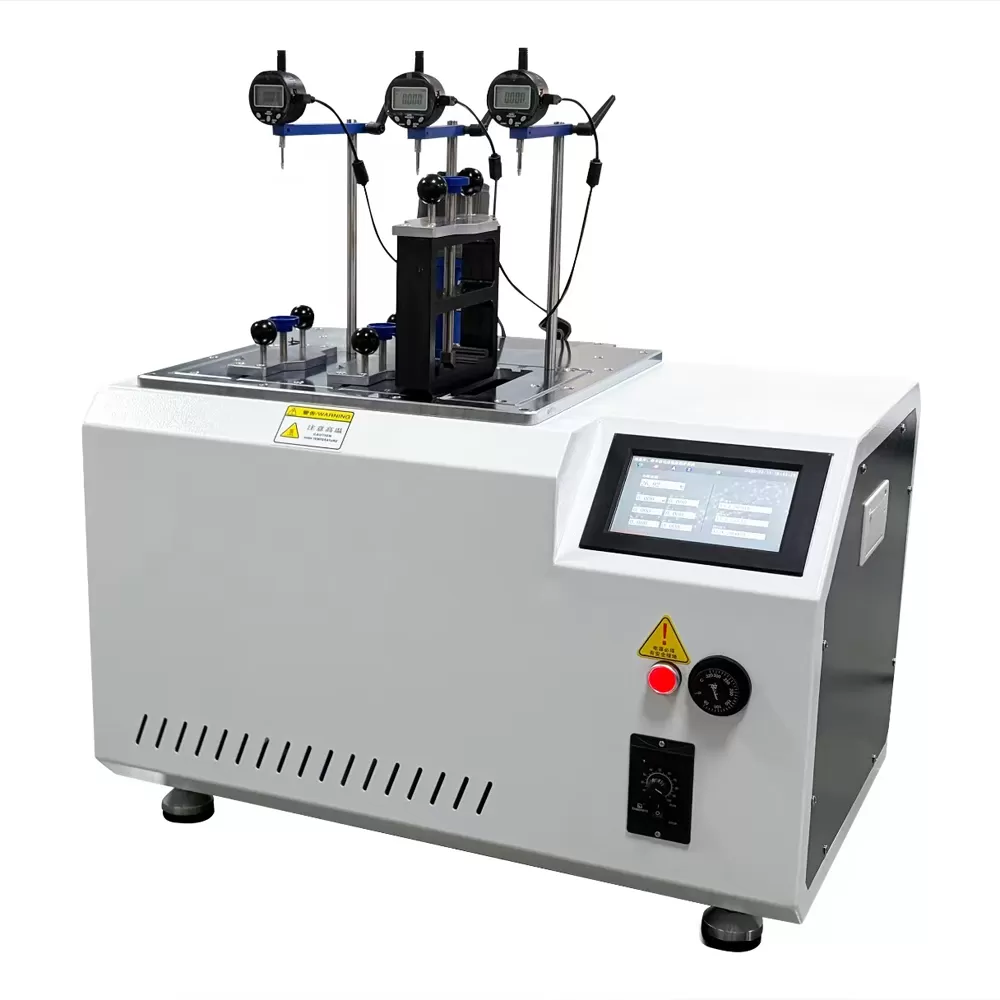
Engineering plastics face demanding thermal stress in modern applications. Electric vehicle battery enclosures, microelectronics, and structural aerospace components rely on polymers like PEEK, PPS, modified polyamides, and polycarbonate blends. Even a minor variance in thermal deformation behavior can lead to field failures, mechanical creep, or assembly defects.
A reliable vicat tester determines the exact temperature at which a standard needle penetrates 1 mm into a thermoplastic specimen under a defined load and uniform heating rate. This measurement, known as the Vicat Softening Temperature (VST), serves as an indispensable metric for raw material verification, compound formulation, and quality assurance.
International testing standards govern this process, primarily ISO 306, ASTM D1525, GB/T 1633, and DIN 53460. As testing requirements evolve toward greater automation and strict data integrity for 2026, selecting the right equipment is critical. Drawing from over 13 years of engineering experience at HAOEN, we evaluate the top five Vicat testing configurations available for modern polymer laboratories.
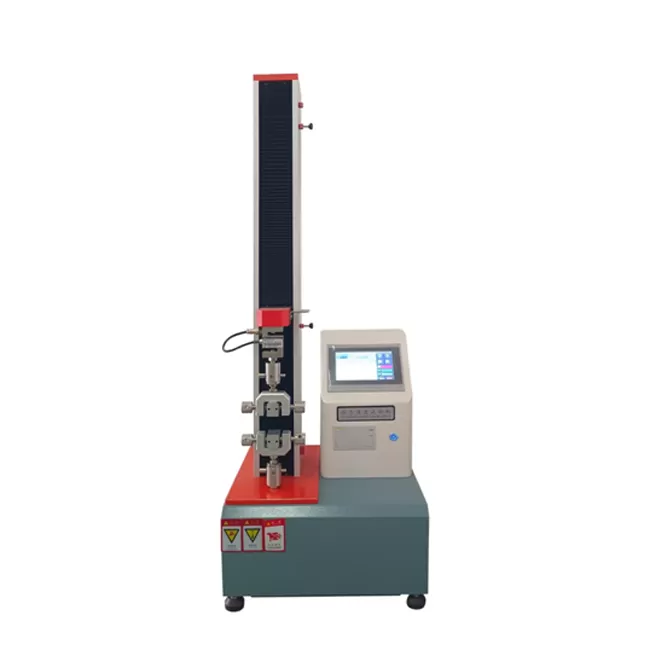
Key Selection Criteria: How We Evaluated These Systems
To provide an objective comparison for lab managers and procurement teams, we assessed equipment across five critical technical categories:
Thermal Control and Gradient Linearity: Compliance demands heating ramps of either 50°C/h or 120°C/h. The heating system must maintain absolute linearity across all stations with oil bath temperature variation below ±0.5°C.
Displacement Measurement Precision: Modern quality control requires optical encoders or Linear Variable Differential Transformers (LVDTs) with a resolution of at least 0.001 mm (1 µm) to detect micro-indentations accurately.
Automation and Operator Safety: Essential features include motorized station lifting, automated sample immersion, integrated exhaust hoods for oil vapors, and independent over-temperature cutoffs.
Throughput and Multi-Station Layout: Multi-station frames (typically 3, 4, or 6 stations) allow simultaneous testing of duplicate samples, which significantly reduces overall test cycle times.
Software Traceability and Data Export: Modern software must provide real-time curve plotting, automatic calculation of softening points, and straightforward export to PDF, Excel, or Laboratory Information Management Systems (LIMS).
Detailed Reviews: The Top 5 Vicat Testers for 2026
1. HAOEN Multi-Station Automated HDT/Vicat Tester (Best Overall for High-Throughput Labs)
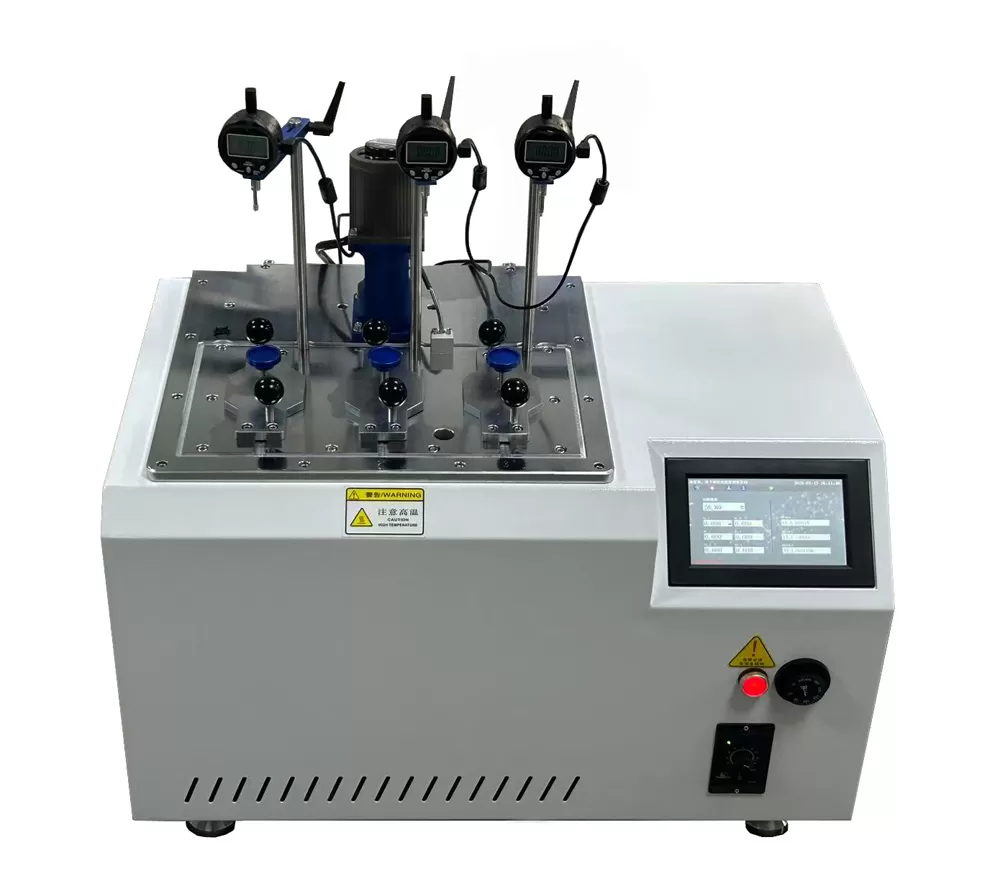
Designed for demanding industrial quality control and high-volume polymer synthesis facilities, this flagship multi-station HDT/Vicat tester combines mechanical rigidity with precision automation. It supports configurations from 3 to 6 independent stations, each equipped with dedicated high-resolution displacement sensors.
The system features an advanced proportional-integral-derivative (PID) algorithm paired with an efficient fluid circulation impeller. This design eliminates thermal dead zones and keeps bath temperature gradients well within ±0.5°C. Automated station lifting and sample immersion minimize direct operator contact with hot silicone oil, while an integrated cooling coil enables fast water cooling between runs.
The companion PC software automatically graphs the penetration-temperature curve for every station, logging raw data for ISO 306 (Method A50, B50, A120, B120) and ASTM D1525 workflows. Manufactured in Dongguan's precision industrial hub, this machine provides an exceptional balance of mechanical longevity, repeatable calibration, and low maintenance overhead.
Best For: High-throughput polymer compounding plants, third-party testing laboratories, and automotive resin certification.
Key Advantage: Exceptional bath stability, pneumatic station automation, and reliable data acquisition.
2. Compact Benchtop Dual-Station Vicat Tester (Best for Small R&D & Universities)
For research groups and smaller manufacturing units with restricted bench space, the compact benchtop vicat softening point tester offers a practical alternative to floor-standing units. This model features one or two testing stations mounted in a space-saving chassis.
Weight sets are applied manually, and sample displacement is measured via direct-reading digital micrometers. While it lacks automatic sample lowering, its smaller fluid reservoir requires less silicone oil and heats up rapidly on standard single-phase power.
The digital controller displays temperature and displacement readouts on a clear LED interface. Operators can export basic comma-separated run logs via USB. Although unsuitable for round-the-clock batch release testing, its low acquisition cost makes it an attractive choice for academic instruction and basic incoming material verification.
Best For: University material science laboratories and low-volume incoming raw material inspection.
Key Advantage: Small footprint, affordable entry point, and low power consumption.
3. High-Temperature Specialized Vicat/HDT Machine (Best for High-Performance Polymers)
Standard silicone oil baths typically reach operational limits around 300°C. However, advanced polymers like Polyetheretherketone (PEEK), Polyimide (PI), and Polyphenylsulfone (PPS) often require thermal evaluation beyond these standard thresholds. This specialized high-temperature heat deflection vicat tester operates safely at temperatures up to 400°C.
To handle high thermal loads without fluid degradation or smoking, the unit uses specialized synthetic thermal fluids or an enclosed inert gas purge. The structural frames are fabricated from low-expansion Invar alloys to prevent frame distortion from skewing micron-level displacement readings at sustained 400°C exposures.
Integrated safety enclosures, rapid liquid-nitrogen cooling options, and heavy-duty vapor extraction come standard on these models. While operating costs are higher due to specialized consumables, it remains an essential tool for aerospace and defense materials qualification.
Best For: Aerospace, defense, and semiconductor polymer qualification (PEEK, PEI, PAI, PI).
Key Advantage: Extended 400°C testing ceiling with active thermal frame compensation.
4. Dry-Medium / Non-Oil Vicat Testing Apparatus (Best for Cleanrooms and Medical Labs)
Traditional silicone oil baths present several operational challenges: fluid disposal costs, fumes, and the need to wash oily residues from post-test specimens. The dry-medium vicat testing machine addresses these concerns by replacing liquid baths with precision-machined aluminum or copper contact heating blocks.
The specimen sits directly between high-conductivity heating surfaces, with thermal energy delivered via embedded electric heating cartridges. Internal temperature sensors placed adjacent to the indenter tip ensure compliance with ASTM D1525 ramp parameters without the use of oil.
This design makes the system well-suited for cleanroom environments, medical device component testing, and pharmaceutical packaging facilities. Clean-up time between runs is virtually zero, although operators must ensure that test samples maintain uniform thickness to prevent air gaps during heating.
Best For: Medical-grade plastics, pharmaceutical packaging, and cleanroom testing environments.
Key Advantage: Zero oil usage, no vapor emissions, and zero solvent cleaning required.
5. Dual-Function 24/7 Heavy-Duty HDT/Vicat Tester with Built-in Chiller (Best for Continuous QC)
In high-capacity resin synthesis and continuous pipe extrusion plants, downtime between thermal testing cycles directly slows down batch approvals. This heavy-duty HDT/Vicat tester integrates an industrial closed-loop refrigeration chiller directly into the lower subframe.
Once a test completes, the machine automatically lifts the test stations, covers the oil bath to minimize vapor loss, and engages the closed-loop heat exchanger. It drops bath temperatures from 250°C back to 30°C in under 15 minutes without external water supplies.
The system features swappable indenters and three-point flexural anvils, allowing technicians to switch quickly between ISO 306 Vicat tests and ISO 75 / ASTM D648 Heat Deflection Temperature (HDT) tests. Its heavy-gauge frame is designed to endure continuous operation without drift in optical sensor alignment.
Best For: Continuous polymer compounding, masterbatch quality control, and large-scale injection molding plants.
Key Advantage: Extremely fast cycle turnaround times and seamless switching between HDT and Vicat modes.
Head-to-Head Technical Comparison
Use the comparison table below to evaluate specifications across all five vicat tester categories:
| Model Configuration | Max Temp | Station Count | Displacement Resolution | Cooling Method | Applicable Standards |
|---|---|---|---|---|---|
| HAOEN Flagship Multi-Station | 300°C / 350°C | 3 to 6 Stations | 0.001 mm (LVDT) | Rapid Internal Water Coil + Air | ISO 306, ASTM D1525, GB/T 1633 |
| Compact Benchtop Model | 300°C | 1 to 2 Stations | 0.01 mm (Digital Micrometer) | Natural Air / Tap Water Assist | ISO 306, ASTM D1525 |
| High-Temp Specialized | Up to 400°C | 3 Stations | 0.001 mm (Invar Corrected) | External Closed Chiller / LN2 Option | ISO, ASTM, DIN Specialized |
| Dry-Medium Cleanroom Unit | 300°C | 3 Stations | 0.001 mm (LVDT) | High-Velocity Ambient Air Blower | ISO 306, ASTM D1525 Modified |
| 24/7 Heavy-Duty QC Unit | 300°C | 4 to 6 Stations | 0.001 mm (High-Precision Optical) | Integrated Refrigeration Chiller | ISO 306, ISO 75, ASTM D1525, ASTM D648 |
Why Partner with HAOEN for Polymer Testing Equipment?
Selecting an instrument supplier is an investment in long-term data integrity and operational reliability. Founded in 2013 in Dongguan, HAOEN has developed specialized expertise across physical, environmental, and thermal testing instrumentation for rubber and plastics.
Our instruments are built from raw metal stock to finished calibration under ISO-certified quality workflows. Every vicat tester undergoes extensive factory temperature-uniformity mapping and mechanical deflection verification before shipment.
HAOEN provides end-to-end technical support, from initial application assessments to on-site commissioning, routine calibration support, and fast spare-part fulfillment. Our engineering team assists test labs worldwide in aligning with international standards without unnecessary equipment complexity.
Frequently Asked Questions (FAQ)
Q1: What is the fundamental difference between HDT and Vicat Softening Temperature?
A1: A Vicat test measures the temperature at which a flat-ended needle with a 1 mm² cross-section penetrates 1 mm deep into a thermoplastic under a 10 N or 50 N load. An HDT (Heat Deflection Temperature) test measures the temperature at which a rectangular bar specimen deflects by a specified distance under a three-point bending flexural load (typically 0.45 MPa or 1.80 MPa).
Q2: Can a single vicat testing machine perform both ASTM D1525 and ISO 306 tests?
A2: Yes. Modern multi-functional testing frames support both standards. You simply adjust the load weights (e.g., 10 N for Method A or 50 N for Method B) and set the heating rate (50°C/h or 120°C/h) via the software controller. The indenter geometry for both standards is identical (1 mm² circular needle).
Q3: How often should the displacement sensors and temperature sensors be calibrated?
A3: We recommend a comprehensive calibration every 12 months. Displacement sensors (LVDTs) should be calibrated using certified gauge blocks. The bath temperature sensors should be verified across multi-point heating runs using a calibrated reference thermometer (such as a PT100 probe).
Q4: Why is silicone oil selection critical for Vicat testing baths?
A4: Using the wrong bath medium can alter your test results and present safety hazards. The oil must maintain low viscosity (typically 200–300 cSt at room temperature) to allow smooth fluid circulation without forming thermal pockets. It must also have a flash point well above the intended maximum test temperature (typically flash points exceed 315°C for general testing).
Q5: What sample dimensions are required for standard Vicat softening testing?
A5: According to ISO 306 and ASTM D1525, specimens should have a thickness between 2.5 mm and 6.5 mm (3.0 mm to 4.0 mm is typical). The specimen must be at least 10 mm by 10 mm in area. Surfaces must be flat, smooth, and free from molded sink marks or burrs to prevent uneven needle penetration.
Selecting the Right System for Your Lab
Choosing the right vicat tester requires balancing test volume, material thermal thresholds, workflow automation, and budget constraints. For facilities processing high sample volumes daily, a multi-station automated system provides the repeatability and throughput needed to avoid testing bottlenecks. Smaller labs and academic departments may find single- or dual-station benchtop units to be a more cost-effective option.
Equipping your facility with the proper thermal testing apparatus protects your product quality and ensures continuous compliance with critical international standards.
Ready to upgrade your polymer testing capabilities? Contact the HAOEN engineering team today for technical advice, a detailed product brochure, or a custom quotation tailored to your testing requirements.
Email: 13631787342 @163.com | Web: www.haoentest.com | Manufacturing Hub: Dongguan, China