

Material failure under direct sunlight costs manufacturers billions of dollars every year. Laboratory managers cannot wait years for outdoor weathering tests to deliver degradation data. Selecting the right xenon test chamber solves this challenge by compressing outdoor exposure into days or weeks.
Precision weathering instruments must reproduce real-world damage mechanisms with extreme accuracy. If your lab plans to upgrade its testing capacity or replace aging equipment, you need clear technical criteria. Manufacturers like HAOEN build modern testing instruments designed to meet strict international standards while controlling operating costs.
Before purchasing your next instrument, request a direct consultation with our technical specialists. Send an inquiry to HAOEN today to review specifications, sample capacities, and pricing customized to your testing scope.
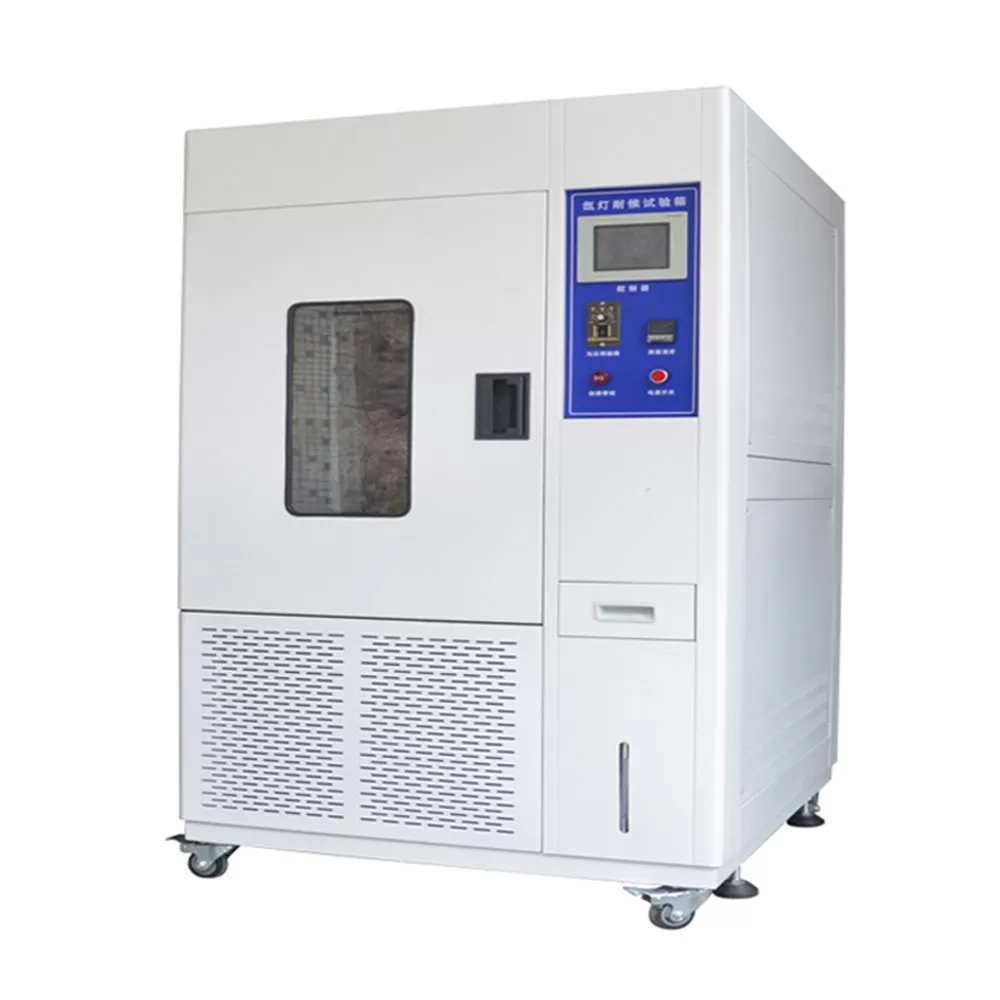
Understanding Xenon Arc Weathering Technology
Solar radiation, heat, and moisture cause polymers, coatings, and textiles to fade, crack, and lose structural integrity. A xenon test chamber uses a specialized xenon arc burner to replicate sunlight more accurately than any other artificial light source. Fluorescent UV testers only reproduce short-wave ultraviolet rays, but xenon burners produce the full solar spectrum.
The full spectrum includes ultraviolet (UV), visible light, and infrared (IR) energy. Infrared radiation generates heat on the surface of your test specimens. Visible light triggers fading in sensitive pigments and dyes. UV radiation breaks chemical bonds within polymer chains.
Modern laboratories require this balanced energy profile to predict service life accurately. Testing materials without infrared heating or visible light often leads to false test results. Choosing a xenon arc system guarantees that your laboratory recreates genuine outdoor and indoor conditions.
Core Architecture: Flat-Array vs. Rotating Carousel
The primary mechanical distinction among test instruments centers on sample positioning. Xenon chambers fall into two main physical architectures: flat-array specimen trays and rotating carousel drums. Each architecture serves distinct testing requirements.
Flat-Array Chamber Systems
Flat-array chambers place specimens on a horizontal or slightly inclined tray beneath stationary lamps. This configuration offers distinct operational benefits for testing labs with diverse part shapes:
- Three-dimensional part testing: You can place bottles, molded plastics, footwear, and automotive components directly on the tray without cutting them down.
- Variable sample sizes: Technicians can arrange test pieces of irregular sizes alongside standard test plaques.
- Simpler specimen mounting: Operators do not need specialized clips or tension holders to secure flat parts.
Flat-bed systems typically use air-cooled xenon lamps. They require effective internal optical reflectors to distribute light uniformly across the exposure area.
Rotating Carousel Systems
Rotating carousel chambers suspend samples vertically on a cylindrical rack that spins around a central xenon lamp. This design represents the traditional standard in textile and plastics testing:
- Superior irradiance uniformity: Because the rack continuously spins past the light source, every specimen receives an identical dose of light over time.
- High sample density: Carousel racks hold dozens of standard flat coupons simultaneously, maximizing throughput.
- Established industry standards: Many historical automotive and textile standards specifically call for rotating rack geometries.
Carousel chambers often feature water-cooled xenon burners, though high-efficiency air-cooled versions also exist. If your laboratory strictly runs two-dimensional flat coupons under ISO or ASTM textile standards, a rotating drum delivers reliable uniformity.
Optical Filters: Matching Solar Spectra to Your Application
A bare xenon arc lamp emits excessive short-wave UV and intense infrared energy that does not exist in natural sunlight. To correct this output, optical filters must surround the lamp. The filter combination determines the spectrum your samples encounter inside the xenon test chamber.
Daylight Filters
Daylight filters eliminate unrealistic short-wave UV radiation below 290 nanometers. They produce a spectral power distribution that closely mirrors direct noon sunlight outdoors. Choose daylight filters if your products face direct exterior exposure, such as automotive coatings, roofing membranes, exterior paints, and outdoor furniture.
Window Glass Filters
Window glass filters block UV wavelengths below 310 or 320 nanometers, simulating sunlight filtered through residential or commercial window glass. You need window glass filters if you test materials destined for indoor environments. Common applications include automotive interiors, carpeting, upholstery fabrics, window blinds, and packaging displayed near store windows.
Extended UV Filters
Extended UV filters allow shorter wavelengths down to 270 or 280 nanometers to reach the test samples. Some test specifications demand this harsher spectrum to force rapid failure during early-stage research. Be careful when running extended UV profiles, as they can cause unrealistic chemical breakdown that never occurs outdoors.
Irradiance Control and Closed-Loop Monitoring
Accurate accelerated weathering demands constant light intensity. As a xenon lamp ages, its output steadily declines while the quartz envelope darkens. Without real-time control, your test results will drift from month to month.
A professional xenon test chamber must feature closed-loop irradiance feedback. This system incorporates narrow-band or broad-band sensors mounted near the specimens. The sensor continuously measures light intensity and signals the power supply to adjust voltage to the lamp automatically.
Consider the monitoring wavelength bandwidth required by your target test standards:
- Narrowband 340 nm: Standard for exterior coatings and plastics (ASTM G155, ISO 4892-2). This wavelength controls the critical UV cutoff region where polymers degrade most rapidly.
- Narrowband 420 nm: Common in textile lightfastness and automotive interior standards (AATCC 16, ISO 105-B02). It controls fading driven by visible and near-UV rays.
- Broadband 300–400 nm: Preferred by specific European industrial standards to manage total UV dosage across the entire ultraviolet spectrum.
Quality instruments from manufacturers such as HAOEN provide versatile sensor ports. These configurations let operators switch monitoring wavelengths when transitioning between automotive, plastic, and textile protocols.
Controlling Temperature, Humidity, and Moisture Delivery
Photochemical degradation accelerates exponentially as surface temperatures rise. Light alone cannot deliver actionable durability data. The chamber must tightly regulate air temperature, black panel temperature, and relative humidity.
Black Panel vs. Black Standard Thermometers
Standard air temperature sensors cannot tell you how hot your samples get under bright xenon light. Dark materials absorb solar heat, making their surface temperatures 20 to 30 degrees Celsius hotter than the surrounding air. Xenon chambers use specialized black sensors to monitor this phenomenon:
- Black Panel Thermometer (BPT): An uninsulated metal plate coated with black enamel. It reflects the surface temperature of uninsulated dark components.
- Black Standard Thermometer (BST): An insulated metal plate coated with black enamel. The thermal insulation behind the sensor slows heat dissipation, recording a higher temperature than a standard BPT.
Always verify whether your target test protocol specifies BST or BPT control. Your chamber controller should allow setpoint management using either sensor type.
Relative Humidity Management
Low humidity can dry out and embrittle certain coatings, while high humidity accelerates hydrolysis in plastics and sealants. Premium chambers use ultrasonic humidifiers or steam generators backed by precision relative humidity sensors. They maintain stable humidity levels during both dry light periods and dark conditioning cycles.
Specimen Spray and Rain Cycles
Thermal shock and mechanical wash-off occur when cold rain strikes hot, sun-exposed surfaces. An industrial xenon test chamber includes automated DI water spray systems. Nozzles spray high-purity water directly onto the face of the samples during designated intervals, simulating rainstorms and morning dew cycles.
Evaluating Chamber Footprint and Cooling Infrastructure
Lab planners frequently overlook facility requirements when procuring weathering chambers. Xenon lamps generate immense thermal energy. You must decide between air-cooled and water-cooled lamp systems based on your facility layout.
Air-Cooled Systems
Air-cooled xenon chambers route room air across the lamp burner and exhaust the heated air out of the building through ductwork. They require minimal plumbing infrastructure. These units operate well in facilities without dedicated process chilled-water loops. However, your lab HVAC system must handle any residual ambient heat gain.
Water-Cooled Systems
Water-cooled xenon arc systems circulate deionized water through an inner and outer glass burner sleeve. This water directly absorbs the extreme heat generated by high-wattage burners (typically 4500W to 6500W). Water-cooled units handle high-intensity test cycles exceptionally well, but they require continuous supplies of filtered cooling water and dedicated heat exchangers.
Compliance with Global Weathering Standards
Never purchase a test chamber based on physical capacity alone. The instrument must satisfy the exact operating parameters of your industry standards. Look for verified compliance across key testing protocols:
- ASTM G155: Standard practice for operating xenon arc light apparatus for exposure of non-metallic materials.
- ISO 4892-2: Plastics — Methods of exposure to laboratory light sources — Part 2: Xenon-arc lamps.
- SAE J2527 / SAE J2412: Performance-based automotive standards for exterior and interior automotive trim components.
- ISO 105-B02: Textiles — Tests for colour fastness — Part B02: Colour fastness to artificial light (Xenon arc fading lamp test).
- ASTM D2565: Standard practice for xenon-arc exposure of plastics intended for outdoor applications.
Ensure the manufacturer provides full documentation, sensor calibration certificates, and optical filter characterization curves that prove direct alignment with these methods.
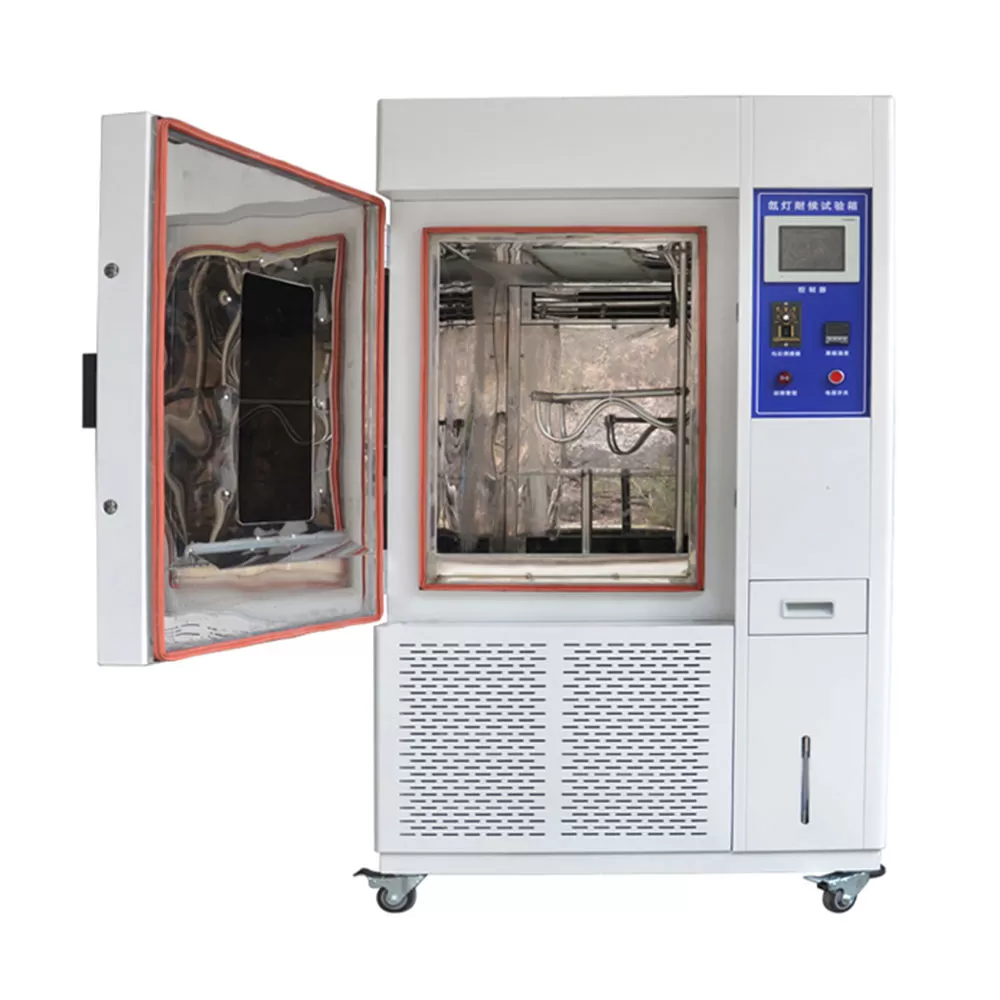
Procurement Checklist for Lab Managers
To simplify your equipment evaluation, run through this practical checklist before issuing a request for quotation:
- Sample Volume: How many flat samples or 3D components must you test concurrently?
- Spectral Range: Do you need Daylight, Window Glass, or Extended UV optical filters?
- Sensor Calibration: Does the machine require manual sensor calibration tools, or does it feature automated calibration routines?
- Water Quality: Does your facility have a reverse osmosis (RO) or deionization (DI) water system capable of supplying the spray cycles without leaving mineral deposits?
- Data Logging: Does the controller record real-time irradiance, BST, chamber temperature, and humidity directly to USB or network servers for audit compliance?
- Lamp Lifespan: What is the rated operating life of the xenon burner, and what does replacement cost per 1,500 to 2,000 hours of operation?
Frequently Asked Questions (FAQ)
Q1: What is the main operational difference between a xenon test
chamber and a UV aging chamber?
A1: A xenon test chamber replicates
the entire solar spectrum, including ultraviolet, visible light, and infrared
radiation. A UV aging chamber uses fluorescent lamps that emit only ultraviolet
wavelengths. Xenon chambers work best for testing colorfastness, gloss
retention, and materials where visible light and thermal heating cause failure.
UV chambers excel at aggressive screening for polymer cracking, yellowing, and
embrittlement caused strictly by short-wave UV rays.
Q2: How often should we replace the xenon arc lamp in our test
chamber?
A2: Most air-cooled xenon arc lamps offer an effective
operational lifespan between 1,200 and 2,000 hours, depending on operating power
levels. Water-cooled burners often last up to 2,000 hours. While modern chambers
compensate for lamp aging by increasing electrical input, lamps must be replaced
once the closed-loop system can no longer achieve the targeted irradiance
setpoint.
Q3: Why must my lab use deionized water for sample spray
cycles?
A3: Tap water and untreated water contain dissolved minerals
such as calcium, magnesium, and silica. When the spray system deposits untreated
water onto hot specimens, the water evaporates immediately and leaves hard
mineral crusts behind. These deposits block light penetration, scratch surfaces,
and invalidate your degradation metrics. Always supply deionized or
reverse-osmosis water with conductivity below 1.0 µS/cm.
Q4: Can one xenon test chamber run both automotive interior and
exterior test methods?
A4: Yes, provided the chamber supports
interchangeable optical filters and variable irradiance control. To switch from
exterior testing (such as SAE J2527) to interior testing (such as SAE J2412),
you must replace Daylight filters with Window Glass filters, switch the
irradiance calibration sensor from 340 nm to 420 nm if specified, and update
your controller setpoints.
Q5: What calibration routines are mandatory for maintaining audit
compliance?
A5: You should calibrate the optical irradiance sensors
every 500 to 1,000 operating hours using a certified reference radiometer.
Temperature sensors, relative humidity probes, and black panel thermometers
require annual calibration against traceable reference devices. Retain all
calibration certificates to satisfy ISO 17025 lab audit requirements.
Secure Reliable Weathering Testing with HAOEN
Choosing the ideal xenon test chamber requires balancing sample geometry, optical filtering precision, facility infrastructure, and capital budget. An undersized or inaccurate chamber produces inconsistent results, risking costly material recalls down the road.
HAOEN engineers precision environmental test instruments built for demanding durability testing schedules. Our systems feature closed-loop irradiance regulation, durable chamber construction, and intuitive controls that simplify compliance across international test methods.
Ready to upgrade your material evaluation capabilities? Contact the HAOEN engineering team today to submit your test parameters, request custom sample tray configurations, and receive a competitive commercial quote.