

Water ingress testing has evolved beyond simple spray booths. Modern electronic assemblies, battery enclosures, and critical sensors face harsher environments than ever before. Meeting these demands requires strict adherence to international ingress protection benchmarks.
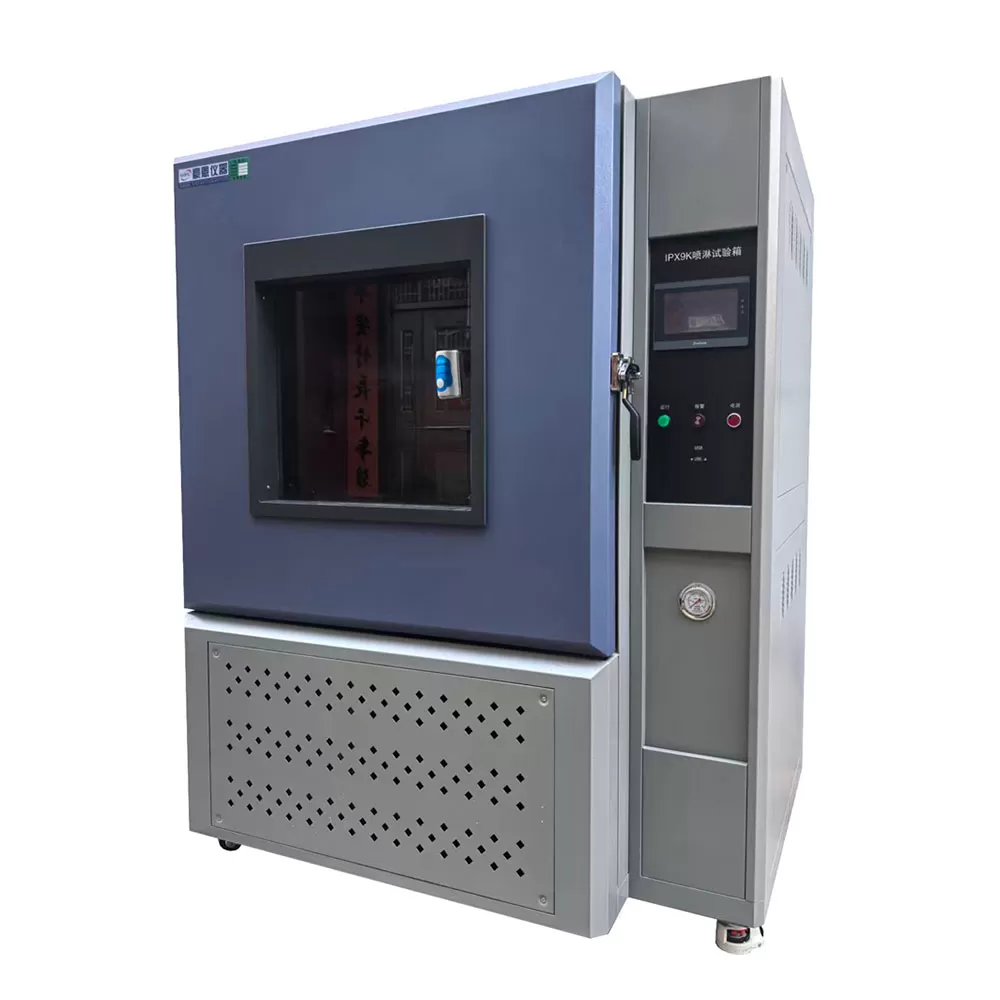
Whether you certify outdoor telecommunications gear or high-voltage automotive parts, testing precision directly impacts market approval. A high-precision rain test machine from manufacturers like HAOEN delivers the exact pressure, temperature, and droplet distribution your lab needs to maintain global compliance.
Looking to upgrade your laboratory capabilities? Contact our engineering team today to review equipment specifications or request an immediate quote for your testing facility.
Why Water Ingress Standards Are Tightening for 2026
Several commercial shifts are driving updates across IEC 60529 and ISO 20653. The rapid rollout of electric vehicles (EVs) places high-voltage batteries and electrical powertrains closer to the road surface. These components experience intense spray, road debris, and thermal shock during regular driving and commercial pressure washing.
Outdoor infrastructure faces identical pressures. Utility-scale battery energy storage systems (BESS), 5G transceivers, and smart grid monitors must endure decades of unshielded exposure. Climate volatility has also driven up the frequency of microbursts and wind-driven storms.
A modern rain test machine no longer just wets a surface. It serves as a data-logging verification system that measures water temperature, spray force, nozzle clearance, and volumetric flow. Laboratories can no longer rely on improvised nozzles or manual monitoring if they want accredited test reports.
Decoding IPX1 to IPX9K: Test Criteria and Machine Capabilities
Selecting the right water ingress test chamber requires matching the target standard to the proper hydraulic system. The IP code separates protection levels into distinct tiers based on moisture severity and fluid velocity.
Low-Tier Drip Testing: IPX1 and IPX2
IPX1 and IPX2 testing simulates gentle condensation and falling rain. The test equipment relies on a motorized drip box fitted with uniformly spaced, precision-drilled needles.
- IPX1: Drops fall vertically at a rate of 1 mm to 1.5 mm per minute for 10 minutes.
- IPX2: The drip box rain test machine delivers 3 mm per minute while the test sample tilts 15 degrees in four fixed positions.
- Key Mechanism: Flow meters and automated leveling systems keep hydraulic head pressure stable across the entire drip area.
Spray and Splash Testing: IPX3 and IPX4
These tiers test housings against driving rain and peripheral splashing. Testing uses either an oscillating tube or a counterbalanced handheld spray nozzle.
- IPX3: The oscillating tube sweeps across an arc of 120 degrees (+/- 60 degrees from vertical) with a flow rate of 0.07 liters per minute per hole.
- IPX4: The arc increases to nearly 360 degrees (+/- 180 degrees from vertical) to cover the entire sample surface.
- Key Mechanism: Servo-driven oscillating tube assemblies control speed, angle, and stroke count without hydraulic jitter.
Water Jet Testing: IPX5 and IPX6
Jet tests evaluate resistance against heavy seas, storm surges, and direct hose spray. Both ratings utilize standardized nozzles connected to high-volume pump skids.
- IPX5: Uses a 6.3 mm nozzle delivering 12.5 liters per minute at a distance of 2.5 to 3.0 meters.
- IPX6: Increases nozzle diameter to 12.5 mm and boosts flow rate to 100 liters per minute with a core stream pressure of 100 kPa.
- IPX6K (ISO 20653): Raises output to an intense 75 liters per minute under 1,000 kPa of pressure, simulating vehicle wash tracks.
Continuous and Temporary Immersion: IPX7 and IPX8
Immersion setups test enclosures submerged beneath water columns. While dynamic spray is absent, internal seal displacement from external hydrostatic pressure remains the failure point.
- IPX7: Submerges equipment to a depth of 1 meter for 30 minutes.
- IPX8: Represents an engineered agreement between manufacturer and customer, often using pressurized immersion tanks that replicate deep-sea environments.
High-Pressure, High-Temperature Washdown: IPX9 and IPX9K
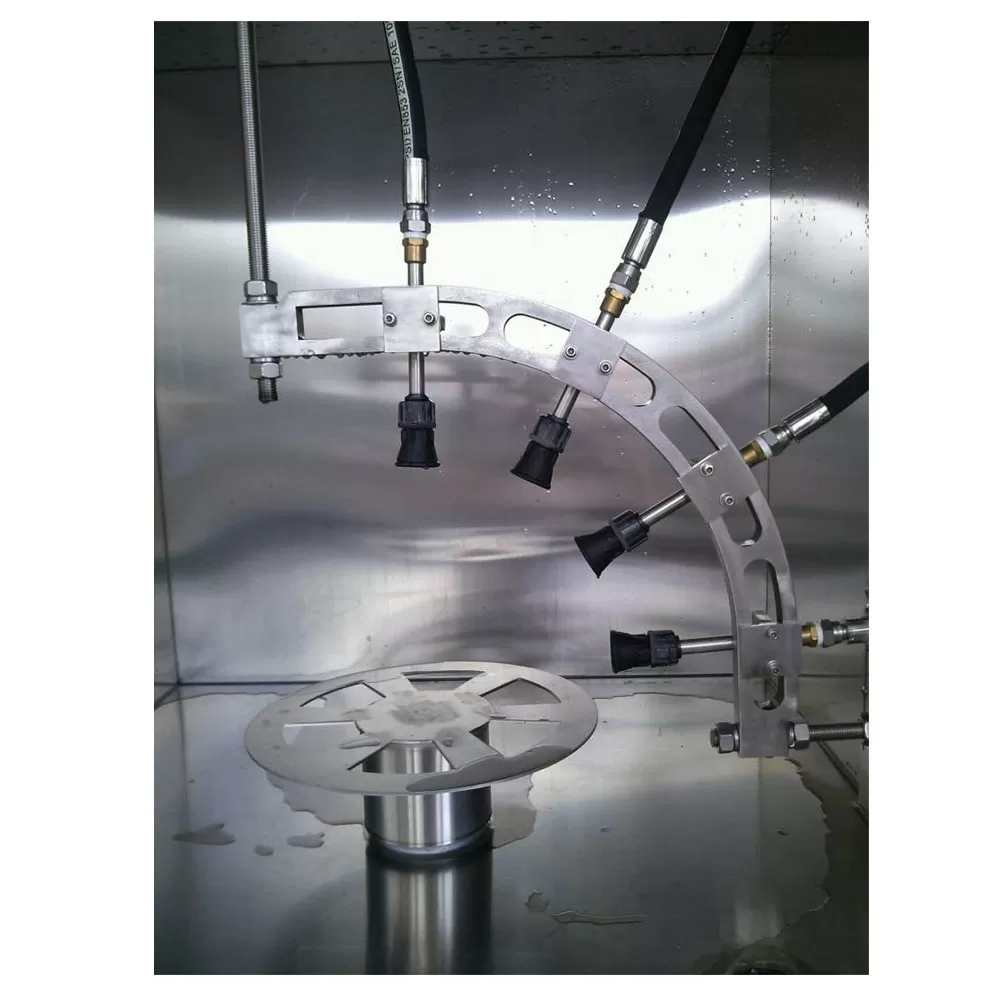
Originally designed for agricultural machinery and food processing sanitation, IPX9K is now standard across automotive electronics. It represents the toughest challenge for waterproof testing equipment.
- Water Pressure: 8,000 to 10,000 kPa (80 to 100 bar).
- Water Temperature: Maintained continuously at 80 degrees Celsius (+/- 5 degrees).
- Spray Angles: Four specific orientations (0, 30, 60, and 90 degrees) applied at a close distance of 100 mm to 150 mm.
- Turntable Rotation: 5 revolutions per minute (+/- 1 RPM) to ensure uniform impact across all seams.
2026 Compliance Outlook: IEC 60529 and ISO 20653 Evolution
Regulatory audits will demand tighter control loops and full process validation by 2026. Laboratories cannot rely on simple mechanical pressure gauges that lack digital calibration paths. The update cycle focuses heavily on three critical areas.
1. Automated Sensor Telemetry and Process Tracing
Manual data collection during ingress protection test routines creates compliance vulnerabilities. Modern 2026-ready systems record flow velocity, nozzle line pressures, and chamber temperatures every second. These parameters bind directly to the batch number of the product under test, preventing test invalidation during third-party lab audits.
2. Severe Testing Protocols for E-Mobility (ISO 20653)
Electric vehicle sub-assemblies now pair environmental thermal chambers with ingress units. Running an IPX9K steam cycle immediately after extreme cold soak testing detects gasket shrinkage and micro-cracking in real time. Advanced testing rigs integrate programmable load steps so the product under test stays powered during dynamic water spray.
3. Closed-Loop Water Conservation and Thermal Efficiency
Continuous IPX6 and IPX9K testing consumes thousands of liters of treated water daily. Next-generation equipment incorporates multi-stage filtration, oil-water separators, and heat recovery circuits. Reusing water without transferring contaminants protects high-pressure pump seals and cuts municipal utility overhead.
Choosing the Right Rain Test Machine for 2026 Standards
Selecting equipment requires balancing laboratory space constraints with your expected testing throughput. An undersized unit limits future commercial opportunities, while an oversized walk-in chamber drives up utility and maintenance costs unnecessarily.
Chamber Design vs. Walk-In Test Rooms
Self-contained box chambers suit components like automotive radar sensors, headlamps, industrial displays, and smart meters. These units integrate water collection basins, pumps, oscillating tubes, and rotating turntables into a single physical footprint.
For complete vehicles, large energy storage racks, or industrial air-handling units, walk-in testing rooms become mandatory. These installations require dedicated drainage trenches, high-capacity water reservoirs, and wall-mounted oscillating arms with multi-axis reach.
Comprehensive Multi-Tier Units vs. Dedicated Machines
Commercial test labs often benefit from an all-in-one rain test machine. These integrated systems combine IPX1 drip boxes, IPX3/IPX4 oscillating arcs, and IPX5/IPX6 jet manifolds inside a single enclosure. While the initial capital cost is higher, it eliminates the need to move test items across separate stations, drastically reducing lab handling time.
Specialized equipment manufacturers like HAOEN design combined platforms with interchangeable nozzle arrays, giving operations complete flexibility across IEC, ISO, and MIL-STD protocols.
Critical Hardware Components to Evaluate
Before issuing a purchase order for waterproof testing equipment, verify the following mechanical components against your quality checklist:
- Pump Construction: Choose multi-stage stainless steel pumps to prevent rust contamination and cavitation wear.
- Turntable Drive Systems: Look for stepper or servo motors equipped with stepless speed control that maintain accurate rotation under unbalanced weight loads.
- Precision Metering: Electromagnetic or turbine flow meters must link directly to programmable logic controllers (PLCs) with digital feedback loops.
- Nozzle Geometry: Ensure nozzles are laser-calibrated and easily detachable for regular ultrasonic descaling.
Industry Application Practices: From Design to Compliance
Passing ingress tests requires matching product housing architecture to the fluid dynamics of specific test tiers.
Automotive ADAS and External Sensors
LiDAR, ultrasonic sensors, and forward-facing cameras sit directly in the impact zone of high-velocity road wash. These assemblies demand IPX6K and IPX9K resistance. Test engineers must mount sensors at vehicle-accurate pitch angles inside the water ingress test chamber to identify seal deflection points under high fluid velocity.
Outdoor Telecommunications and Energy Storage
Industrial battery cabinets and outdoor 5G base stations rely on passive labyrinth seals and breathable ePTFE membranes. A long-duration IPX4 or IPX5 test exposes issues where standing water bridges internal drainage paths. Modern compliance tests maintain active airflow through the cabinet during testing to ensure interior negative pressure does not draw moisture inside.
Consumer Wearables and Electronics
Wearables demand sub-millimeter precision. When running an IPX3 oscillating tube test on micro-acoustic ports or optical biosensors, minor turbulence distorts test validity. Micro-drop test machines isolate flow rates down to single-digit milliliters per minute, ensuring test consistency across delicate acoustic membranes.
Calibration and Maintenance for Reliable Test Results
Even the most robust rain test machine loses testing fidelity without regular scheduled maintenance. Mineral deposits, debris, and pump seal wear alter fluid mechanics over time, risking non-compliant test runs.
Water Quality and Filtration Management
Always operate ingress testing apparatus using reverse-osmosis (RO) or deionized water systems. Tap water contains calcium and magnesium salts that quickly clog IPX1/IPX2 drip needles and IPX3/IPX4 spray ports. Clogged orifices alter droplet size and disrupt velocity profiles.
- Inspect and replace secondary intake filters monthly.
- Perform quarterly descaling cycles on internal storage tanks and pipe manifolds.
- Purge high-pressure IPX9K heating lines after every high-temperature test run to stop mineral scale buildup.
Instrumentation Verification Schedules
Auditors operating under ISO/IEC 17025 mandate documented calibration trails for all active sensors. Flow meters, pressure transducers, and water temperature probes require annual recertification against traceable reference standards.
Check nozzle center-point alignment every six months. Turntable centerlines must stay aligned with the oscillating tube's arc radius; otherwise, the water jet will deliver uneven spray coverage across the sample surface.
Frequently Asked Questions
Q1: What is the main difference between IEC 60529 and ISO 20653
during water testing?
A1: IEC 60529 applies to general electrical
and electronic enclosures across consumer, commercial, and industrial markets.
ISO 20653 specifically targets road vehicle electrical equipment. ISO 20653
includes dedicated automotive test tiers like IPX6K and adds tighter water
pressure and flow limits to reflect aggressive road spray and cleaning
operations.
Q2: Can one single rain test machine execute all test tiers from IPX1
up to IPX9K?
A2: Yes. Comprehensive chambers combine low-pressure
drip plates, motorized oscillating tubes, jet spray nozzles, and
high-pressure/high-temperature IPX9K water manifolds inside one footprint.
However, IPX7 and IPX8 tests typically rely on separate submersion tanks due to
the water volumes and static pressure levels required.
Q3: Why is deionized water necessary for IPX9K
testing?
A3: IPX9K heating circuits heat water up to 80 degrees
Celsius under 100 bar of pressure. Using mineral-rich tap water causes rapid
calcium scaling on high-pressure pump pistons, heater elements, and the
calibrated 0-degree, 30-degree, 60-degree, and 90-degree fan nozzles. Mineral
scale alters spray patterns and causes premature heating element failure.
Q4: How frequently must rain test machine spray nozzles be
calibrated?
A4: Most test labs verify spray nozzles annually under
standard ISO/IEC 17025 rules. However, high-throughput commercial labs should
check nozzle output monthly using graduated flow collection cylinders to quickly
spot orifice erosion, internal burrs, or partial clogs.
Q5: Can I test high-voltage EV battery packs while actively powered
inside the chamber?
A5: Yes, provided the rain test machine includes
dedicated safety interlocks, sealed power feed-through ports, continuous
hydrogen monitoring systems, and automatic emergency drainage valves. Testing
active high-voltage batteries also requires clear isolation between the
equipment chassis and the chamber ground.
Secure Your 2026 Compliance Capabilities Today
Global regulatory frameworks continue to raise expectations for structural durability and environmental sealing. Meeting the technical demands of IEC 60529, ISO 20653, and emerging EV specifications requires dependable, highly accurate waterproof testing equipment.
Avoid audit failures and costly product recalls by upgrading your validation infrastructure. Speak directly with a test specialist at HAOEN to discuss your project requirements, request a full compliance review, or receive a fast, customized quotation tailored to your laboratory roadmap.