
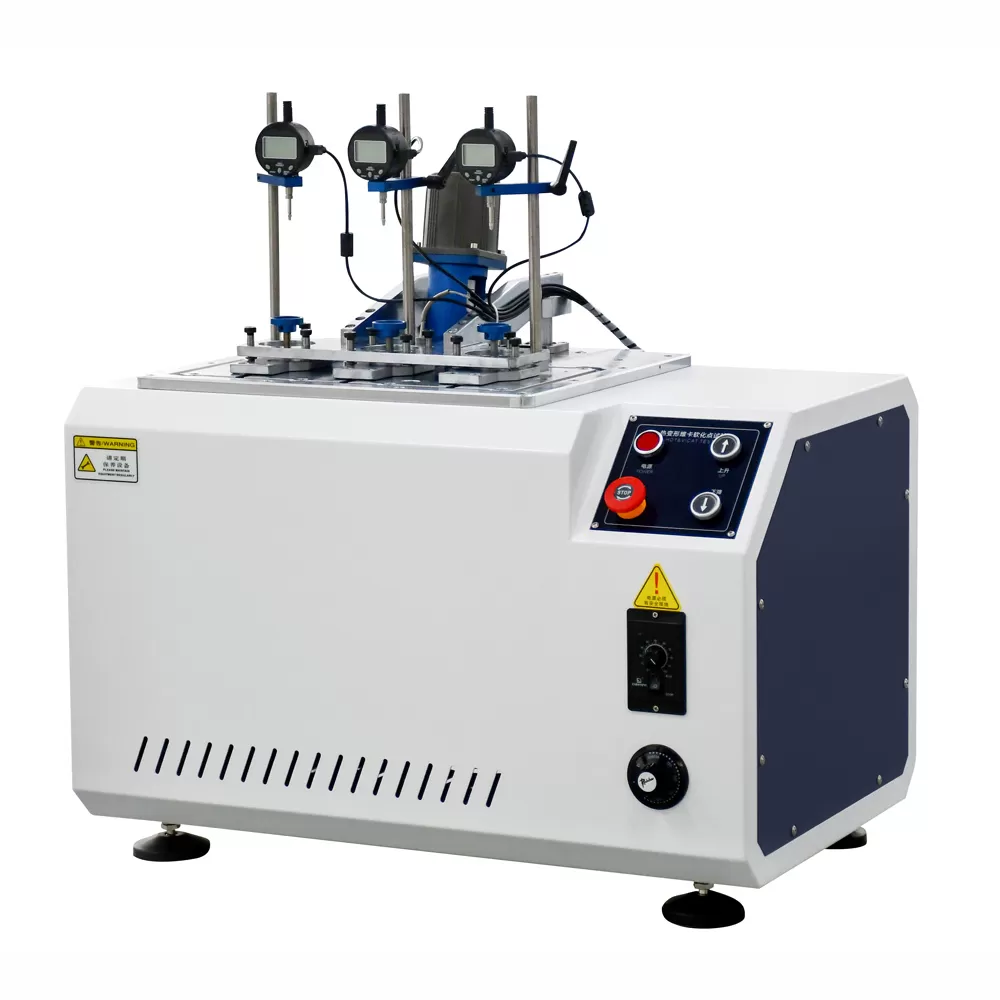
Thermal characterization forms the backbone of quality control for polymer and construction testing laboratories. When materials face heat under mechanical load, their dimensional stability dictates whether a product succeeds or fails in service.
Lab managers often encounter significant bottlenecks during heat deflection and softening point tests. Inconsistent bath temperatures, manual recording errors, and complex standard compliance audits can reduce testing throughput and inflate labor costs.
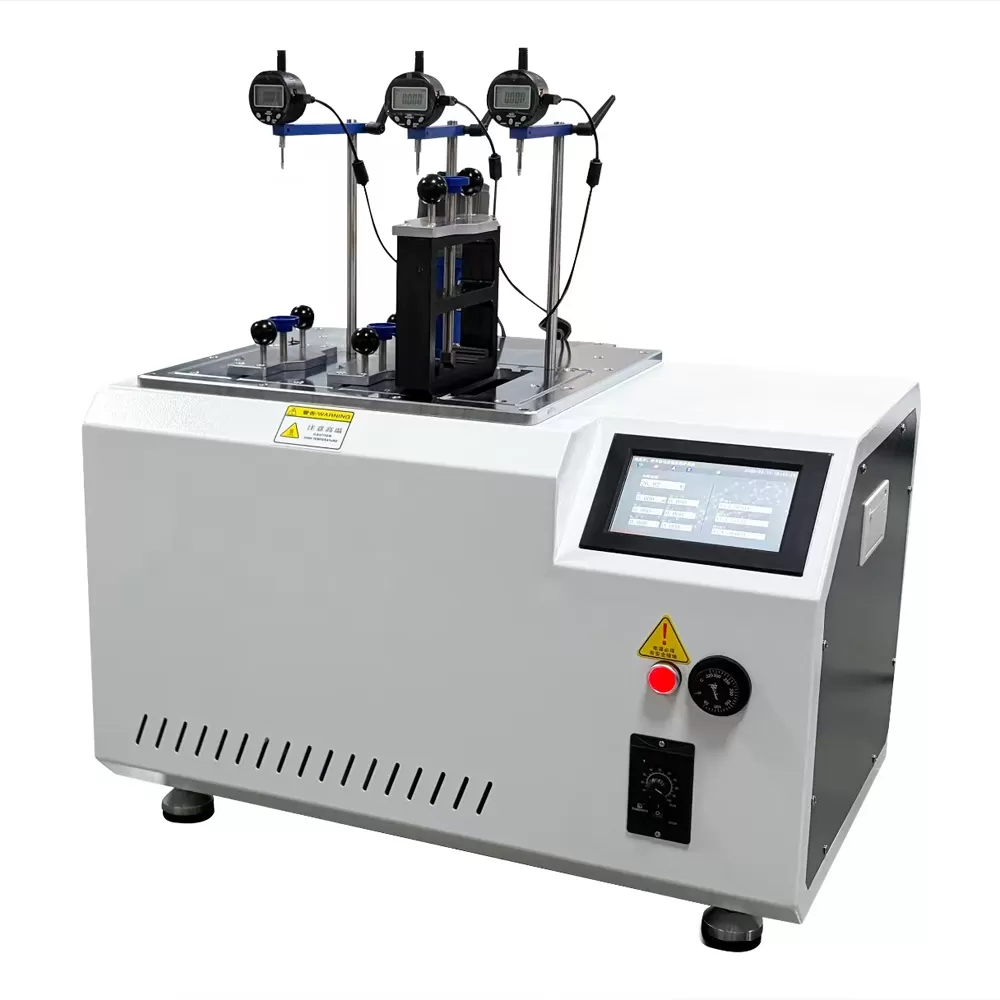
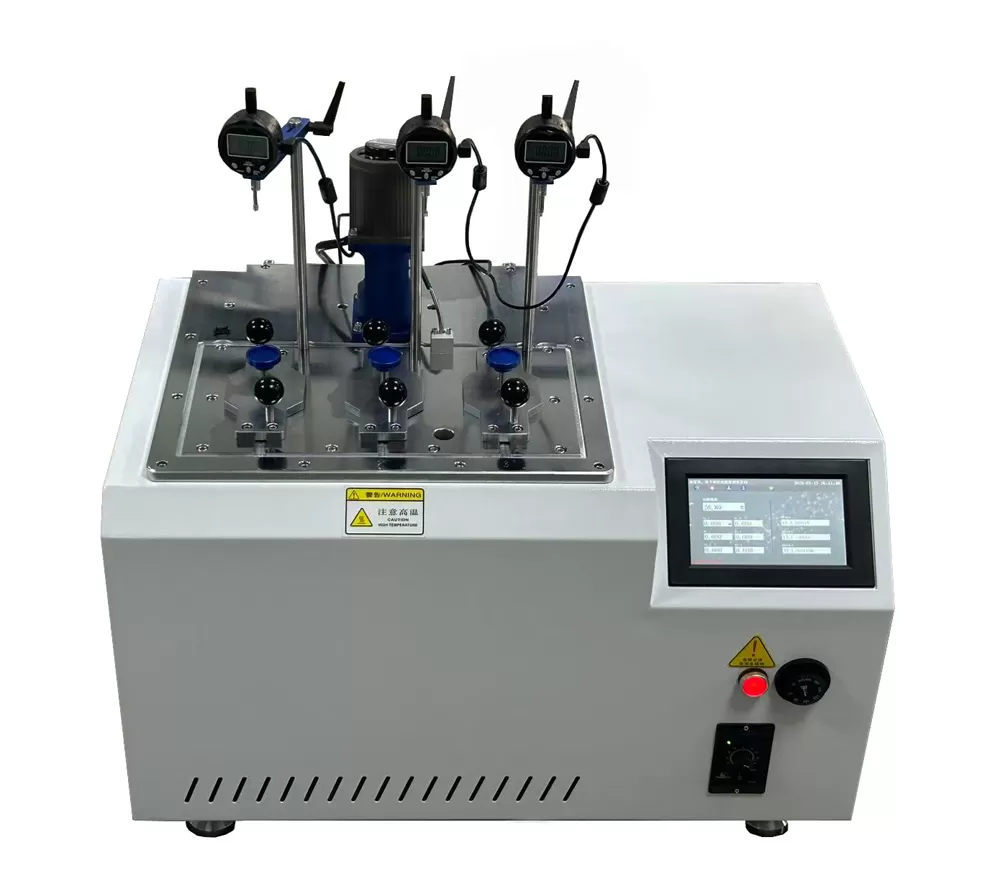
Investing in an advanced vicat testing machine resolves these operational challenges. Modern instruments manufactured by established instrumentation providers like HAOEN ensure tight temperature control, repeatable test curves, and seamless compliance across international testing standards.
This buying guide walks you through application requirements, technical criteria, standard compliance checklists, and total cost of ownership factors to help you make an informed capital equipment purchase.
1. Understand Your Application: Polymers vs. Cementitious Materials
The term "Vicat test" applies to two distinct testing domains. Clarifying your testing substrate is the primary step before evaluating equipment hardware.
Plastics and Polymers: In polymer science, the test determines the Vicat Softening Temperature (VST) and Heat Deflection Temperature (HDT). The test measures the temperature at which a flat-ended circular needle with a 1 mm² cross-section penetrates 1 mm into the specimen under a specific load (10 N or 50 N) while temperature rises uniformly.
Cement and Building Materials: In construction laboratories, a cement Vicat apparatus measures the initial and final setting times of hydraulic cement paste. The needle dimensions and displacement profiles differ significantly from polymer testing equipment.
For plastics testing, most modern laboratories prefer a dual-purpose HDT Vicat tester. These combination units allow technicians to switch between Vicat penetration tests and HDT three-point bending tests simply by swapping the indenter tips and adjusting the specimen supports.
2. International Standards & Compliance Checklist
Your testing equipment must adhere strictly to the testing methods mandated by your clients, regulatory bodies, and industry frameworks. Ensure your candidate machine supports the following protocols:
ISO 306 & ASTM D1525: Standard test methods for Vicat softening temperature of thermoplastics. Key test variations include Method A (10 N load) and Method B (50 N load), combined with heating rates of 50°C/h (Rate 50) or 120°C/h (Rate 120).
ISO 75 & ASTM D648: Determination of temperature of deflection under load (HDT) using standard flexural stresses of 0.45 MPa (Method B) or 1.80 MPa (Method A).
ASTM C191 / EN 196-3: Standard test methods for time of setting of hydraulic cement by Vicat needle.
When reviewing technical datasheets, verify the critical tolerances listed below to ensure standard compliance:
Indenter Geometry: Hardened steel needle with a circular cross-section of 1.000 ± 0.015 mm² and a flat, polished contact face.
Load Application Accuracy: Combined mass of the load rod and calibrated weights must maintain an accuracy within ±1% of the target force.
Displacement Sensor Resolution: The vertical displacement measurement system must deliver a resolution of ≤ 0.001 mm (1 µm) to detect the exact 1.000 mm penetration point reliably.
3. Key Technical Factors to Evaluate
Comparing technical specifications across different models requires a methodical approach. Focus on the following core engineering elements to find the right balance of throughput, precision, and longevity.
3.1 Number of Test Stations
Testing throughput depends directly on station capacity. Because a standard heating ramp runs at 50°C/h or 120°C/h, a complete test cycle—including heating and cooling—can take up to two hours.
1 to 3 Stations: Ideal for university research labs, raw material screening, and low-volume testing facilities where run frequency is low.
4 to 6 Stations (or more): Essential for high-volume commercial testing laboratories, tier-one compounding plants, and automotive QA departments that run continuous sample batches.
3.2 Heating Medium and Thermal Stability
Thermal uniformity across all testing stations dictates repeatability. You will generally choose between two heating technologies:
Silicone Oil Bath Systems: Traditional liquid baths utilize high-temperature silicone oil circulating continuously around the test stations. Oil baths provide superior temperature uniformity (within ±0.5°C across all stations) and maximum operating temperatures up to 300°C. However, they require routine oil changes, exhaust ventilation for vapor management, and active cooling cycles.
Oil-Free Dry Heating Systems: Modern dry systems use fluidized media or aluminum contact blocks. They eliminate oil fumes, reduce hazardous waste disposal, and simplify sample handling. High-end polymer manufacturers frequently select oil-free systems for cleanroom operations or automated testing cells.
Ensure the machine uses advanced proportional-integral-derivative (PID) temperature control. The controller must maintain linear heating rates of 50°C/h (±5°C/h per 6-minute interval) and 120°C/h (±12°C/h per 6-minute interval) across the full test range.
3.3 Automation and Operational Safety
Manual testing introduces handling risks and operator-induced measurement scatter. Modern systems from engineering manufacturers like HAOEN incorporate automated mechanics that protect both operators and samples:
Motorized Station Lift: Automatically lowers the test frames into the heating bath at the start of a run and lifts them clear of the hot oil at the end of the test.
Integrated Rapid Cooling: Built-in water-cooling coils or internal heat exchangers cool the bath back to starting temperatures (typically below 30°C) within minutes, maximizing daily test runs.
Automated Loading Mechanisms: Pneumatic or motorized weight selectors apply the correct test load automatically, removing the risk of dropping calibration weights on displacement rods.
Comprehensive Safety Interlocks: Over-temperature protection switches, liquid level sensors, and auto-shutoff mechanisms prevent thermal runaway or dry-firing hazards.
3.4 Displacement Sensor Precision: LVDT vs. Optical Scales
Capturing the precise moment when the needle penetrates 1.000 mm into the specimen requires high-grade transducers.
Linear Variable Differential Transformers (LVDTs): Highly reliable, frictionless, and robust against ambient thermal drift. They provide continuous analog-to-digital measurement with sub-micron resolution.
Optical Linear Encoders: Provide direct digital readouts with zero hysteresis. Make sure optical assemblies sit isolated from direct thermal radiation from the bath surface.
3.5 Software Architecture and LIMS Integration
Software capabilities dictate how smoothly your lab manages testing data. Look for software packages that deliver:
Live graphical plotting of temperature vs. displacement for all stations simultaneously.
Pre-programmed test templates matching ASTM D1525, ISO 306, ISO 75, and ASTM D648.
Automated calculation of softening point, deflection temperature, and user-defined offset values.
Customizable report generation (PDF, Excel, CSV) and bidirectional integration with Laboratory Information Management Systems (LIMS).
Multi-level user access management with complete audit trails to support ISO/IEC 17025 accreditation audits.
4. Total Cost of Ownership (TCO): Beyond the Initial Price Tag
When building your capital expenditure budget, evaluate lifetime operational expenses alongside the base Vicat testing equipment price.
Consumable Costs: Silicone heat transfer fluid degrades over time due to high thermal cycling. Budget for annual fluid replacements. Factor in the cost of spare penetration needles, HDT loading tips, and calibration standard blocks.
Energy Consumption and Cooling Water: Multi-station heating tanks require significant electric power (typically 3 kW to 6 kW). Ensure your lab has sufficient electrical supply and a dedicated chilled water line or closed-loop chiller to support cooling between test cycles.
Calibration and Service Support: Annual calibration of temperature sensors, displacement transducers, and weight sets is non-negotiable for accredited facilities. Partner with manufacturers who offer factory-trained field service support, accessible replacement parts, and direct technical documentation.
5. Decision Matrix: How to Choose the Right Model
Use the matrix below to match your operational scope with the most cost-effective hardware configuration:
| Laboratory Profile | Recommended Configuration | Primary Advantages |
|---|---|---|
| Academic & Research Labs | 2 to 3 stations, semi-automatic loading, silicone oil bath | Low initial investment, easy sample reconfiguration, compact benchtop footprint. |
| Industrial QC / Polymer Processors | 4 to 6 stations, fully automatic lift, motorized weight application | High daily throughput, minimal operator handling, rapid turnaround between batches. |
| Advanced R&D / Cleanroom Facilities | 3 to 6 stations, oil-free dry heating system, LIMS automation | Zero oil fume emissions, clean sample retrieval, broad temperature range, audit-ready data tracking. |
6. Frequently Asked Questions (FAQ)
Q1: What is the main operational difference between Method A and
Method B in ISO 306?
A1: Method A uses a total
force of 10 N ± 0.2 N, whereas Method B applies a total force of 50 N ± 1.0 N.
Method A is generally selected for softer materials or flexible polymers, while
Method B is the standard choice for rigid engineering plastics.
Q2: Can I perform both HDT and Vicat tests on the same
machine?
A2: Yes. Most modern thermal deformation
systems function as dual-purpose units. You switch between tests by
interchanging the test tip (a 1 mm² flat needle for Vicat or an R3.0 mm rounded
edge for HDT) and adjusting the specimen span supports on the test frame.
Q3: How often should we calibrate the displacement sensors and
temperature probes?
A3: Accredited testing
facilities (such as ISO/IEC 17025 labs) should calibrate temperature sensors and
displacement transducers at least once every 12 months. In high-throughput
industrial environments running continuous shifts, calibrate every six months to
prevent measurement drift.
Q4: Why is bath stirring critical in a liquid-based Vicat testing
machine?
A4: Without vigorous, continuous fluid
circulation, thermal gradients form within the silicone oil bath. Inadequate
circulation can cause a temperature variance of several degrees between the top
and bottom of the sample, or between different test stations, directly
compromising test reproducibility.
Q5: What are the main benefits of an automatic Vicat tester compared
to a manual system?
A5: An automatic system removes
operator variance in applying test loads, records displacement digitally with
sub-micron accuracy, lifts the sample frames automatically when test criteria
are met, and triggers accelerated cooling cycles. This automation prevents
needle damage and shortens the test turnaround cycle.
7. Conclusion & Next Steps
Selecting the right thermal testing instrument involves matching your required testing standards, daily sample throughput, and automation goals against your operational budget. A well-engineered automatic Vicat tester streamlines laboratory workflow, ensures audit compliance, and delivers dependable thermal data for years of continuous testing.
Precision manufacturing brands like HAOEN provide robust HDT and Vicat testing platforms designed for demanding industrial and research applications. Taking the time to evaluate station capacity, sensor precision, and heating stability today safeguards your testing integrity tomorrow.
Ready to upgrade your material testing capabilities? Contact our technical engineering team today to review your testing standards, discuss custom station configurations, and receive a tailored quotation.
Email:13631787342 @163.com | Website:www.haoentest.com