
Global supply chains demand strict consistency in raw materials and finished polymer goods. Whether producing automotive resins, medical-grade tubing, or consumer packaging, manufacturers face clear technical barriers when exporting to international markets. Success depends on meeting standardized mechanical, thermal, and rheological criteria.
Two primary standards organizations dominate modern plastics manufacturing: ASTM International (historically American) and the International Organization for Standardization (ISO). While both frameworks aim to guarantee material performance and safety, their technical requirements often diverge. Selecting versatile, high-precision plastic testing equipment is the most reliable way to maintain compliance across both systems.
For more than 13 years, HAOEN has engineered laboratory-grade testing machines that help resin producers, compounders, and parts molders verify their products against international benchmarks without operational bottlenecks.
1. The Global Benchmark: Why ASTM & ISO Compliance Dictates Plastic
Manufacturing
Plastic components behave differently under mechanical load, temperature fluctuations, and environmental exposure. ASTM and ISO standards establish uniform testing methodologies so that buyers and suppliers speak the exact same technical language. However, treating these two systems as interchangeable creates serious operational risks.
While both organizations evaluate similar properties, their protocols differ in fundamental ways:
Specimen Geometry: ASTM and ISO often prescribe different sample dimensions, cross-sections, and gauge lengths, directly altering stress distribution during physical tests.
Test Speeds and Conditions: Strain rates, pre-load forces, and conditioning temperatures vary between standards, which impacts visco-elastic polymers sensitive to deformation speed.
Data Reporting: ASTM typically accommodates imperial and metric outputs, whereas ISO strictly relies on SI metric units. Calculated values like modulus also use different secant or chord calculation points.
Failing to adhere to the designated regional standard brings severe commercial consequences. Material lots face rejection at customs, tier-one manufacturers issue chargebacks, and unexpected part failures trigger costly field recalls. Global compliance begins in the quality control laboratory, where certified plastic testing equipment eliminates measurement uncertainty before materials leave the factory floor.
2. Core Plastic Testing Equipment for ASTM & ISO Standards
Setting up a fully compliant polymer laboratory requires purpose-built instruments configured for specific physical, thermal, and chemical stress tests. Below are the primary testing instruments required to meet global ASTM and ISO directives.
A. Mechanical Property Testing: Universal Testing Machines (UTM)
Tensile, flexural, compression, and shear testing represent the foundation of mechanical QA for rigid and flexible polymers.
Relevant Standards: ASTM D638 / ISO 527 (Tensile Properties), ASTM D790 / ISO 178 (Flexural Properties), ASTM D695 / ISO 604 (Compressive Properties).
Application: A universal testing machine for plastics measures yield strength, ultimate tensile strength, elongation at break, and flexural modulus. These values determine whether a structural plastic can withstand service loads without permanent deformation.
HAOEN Advantage: HAOEN universal testing machines feature high-precision load cells with class 0.5 accuracy, anti-slip pneumatic grips, and advanced closed-loop digital controllers. The software contains pre-loaded ASTM and ISO test profiles, enabling one-click report generation with automatic chord modulus calculation.
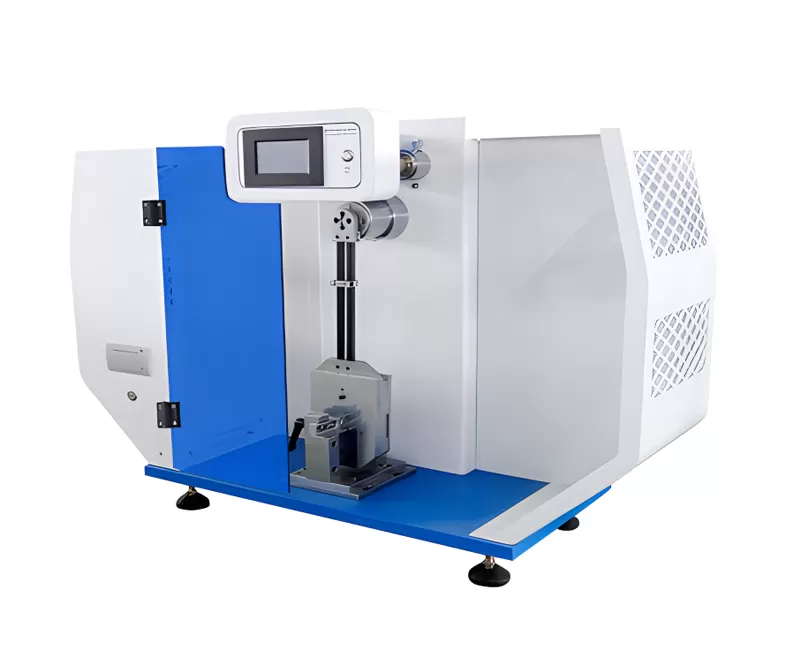
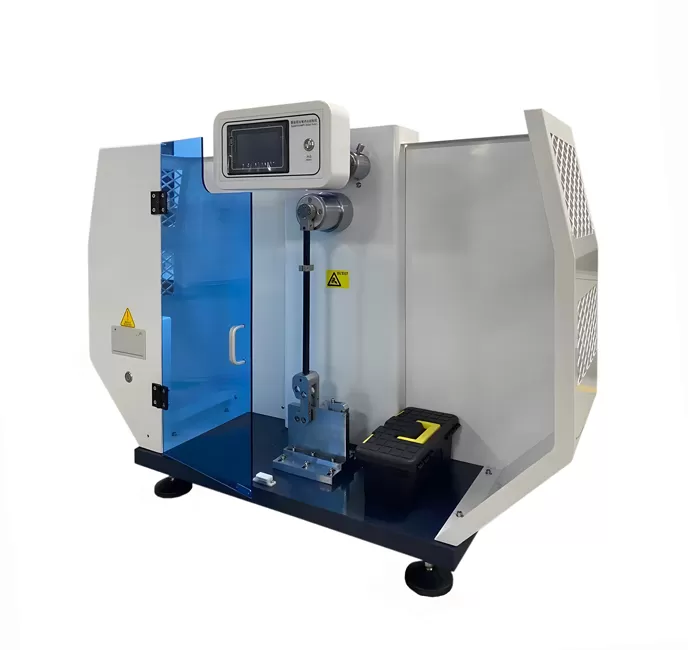
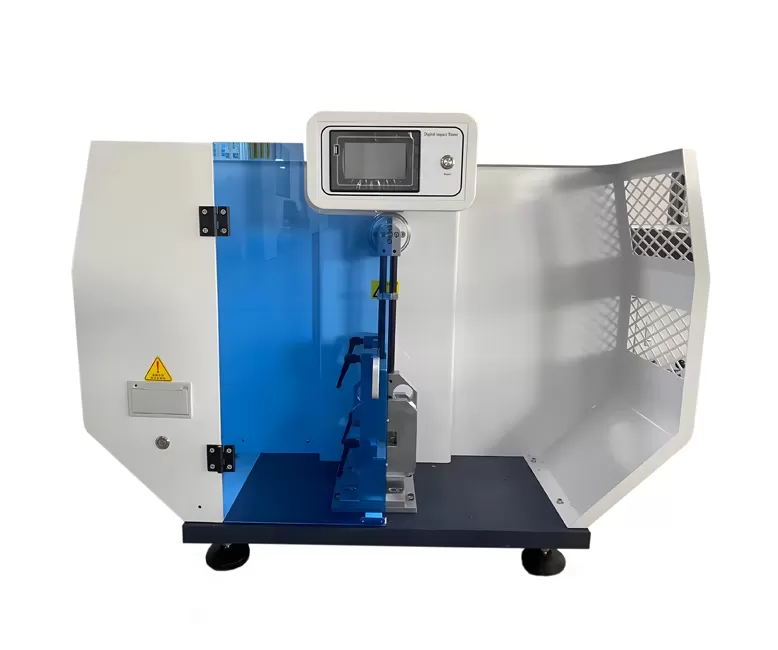
B. Impact Resistance Testing: Izod & Charpy Impact Testers
Polymers often experience sudden shocks or drop impacts during real-world use. Impact testers evaluate energy absorption and notch sensitivity.
Relevant Standards: ASTM D256 / ISO 180 (Izod Impact), ISO 179 (Charpy Impact), ASTM D6110 (Charpy Impact of Notched Plastics).
Application: Pendulum impact testers evaluate the toughness of plastics by measuring the energy absorbed when breaking a notched or unnotched specimen. This reveals the brittle-to-ductile transition point of compounds used in safety helmets, electronic enclosures, and automotive bumpers.
HAOEN Advantage: HAOEN supplies combination Izod and Charpy impact testers equipped with low-friction bearings, digital angle encoders, and interchangeable hammers. Operators can quickly swap strikers and anvils to transition between ASTM Izod cantilever setups and ISO Charpy three-point configurations.
C. Rheological Testing: Melt Flow Indexers (MFI / MFR / MVR)
Melt flow measurement provides a rapid snapshot of a polymer's molecular weight, flowability, and processing consistency.
Relevant Standards: ASTM D1238 / ISO 1133 (Procedure A Mass Method and Procedure B Displacement Method).
Application: A melt flow index tester measures the rate of extrusion of molten resin through a standard die under prescribed conditions of temperature and load. Molders rely on MFR/MVR data to adjust injection pressures and verify batch-to-batch polymer grade consistency.
HAOEN Advantage: HAOEN melt flow indexers use micro-PID thermal controllers that maintain temperature stability within ±0.2°C across the heating cylinder. The machines feature motorized automatic cut-off mechanisms and optical encoders for high-precision volumetric flow rate (MVR) determination without operator bias.
D. Thermal Performance: HDT / Vicat Softening Point Testers
Thermoplastics lose mechanical stiffness as temperatures rise. Determining thermal deflection thresholds is critical for parts placed near heat sources.
Relevant Standards: ASTM D648 / ISO 75 (Deflection Temperature Under Load - HDT), ASTM D1525 / ISO 306 (Vicat Softening Temperature).
Application: HDT testers record the exact temperature at which a standard bar deflects by a specified distance under 0.45 MPa or 1.80 MPa loads. Vicat testers measure the temperature at which a flat-ended needle penetrates 1 mm into the polymer surface.
HAOEN Advantage: HAOEN builds multi-station HDT/Vicat systems equipped with automated sample immersion racks, rapid heat-transfer oil baths, and built-in exhaust systems. Linear Variable Differential Transducers (LVDT) measure micro-deflections with micron-level precision, paired with automatic safety shut-offs for over-temperature protection.
E. Environmental & Aging Durability: Climate Test Chambers
Plastics exposed to outdoor environments degrade through photo-oxidation, moisture absorption, and thermal cycling.
Relevant Standards: ASTM D4329, ASTM G154 / ISO 4892-3 (Fluorescent UV Condensation), ISO 4892-2 (Xenon Arc Exposure), IEC 60068 (Temperature/Humidity Cycling).
Application: Climate and weathering chambers simulate years of sunlight, rain, condensation, and temperature swings in compressed timeframes. Testing reveals chalking, discoloration, embrittlement, and structural breakdown in engineering plastics.
HAOEN Advantage: Built on 13+ years of specialized environmental chamber manufacturing, HAOEN aging chambers offer uniform irradiance control, tight relative humidity tolerances (±2% RH), and programmable cyclic routines that replicate global climate zones.
3. How HAOEN Bridges the Gap in Global Plastic Testing Compliance
Selecting reliable plastic testing equipment requires partnering with a manufacturer that understands both technical machinery and international compliance frameworks. HAOEN provides complete polymer lab solutions designed to bridge the gap between ASTM and ISO testing environments.
13+ Years of Manufacturing Integrity: Founded in 2013 in Dongguan, HAOEN operates as a recognized National High-Tech Enterprise, maintaining deep expertise in physical, thermal, and climatic test instrumentation.
Complete Laboratory Coverage: HAOEN supplies the entire testing workflow, from sample preparation machines (notching cutters and dumbbell specimen die punchers) to multi-axis mechanical testers and environmental simulation chambers.
Traceable Measurement Accuracy: All HAOEN testing equipment integrates calibrated components traceable to national metrology institutes, ensuring test reports pass third-party regulatory audits and client inspections.
International Support Infrastructure: HAOEN backs every installation with direct engineering assistance, on-site commissioning, machine operator training, and comprehensive spare-parts availability across overseas markets.
4. Key Factors to Consider When Sourcing Plastic Testing Equipment
Procuring laboratory equipment is a long-term investment. QA managers and procurement specialists should evaluate the following points before selecting an instrument supplier:
Load Range and Sensor Sensitivity: Ensure the machine's load cell covers your weakest film and strongest composite without losing resolution at the lower end of the force curve.
Software Flexibility: The operating software must allow quick transitions between ASTM and ISO testing standards, including customizable formula fields and automated statistical analysis.
Grip and Fixture Adaptability: Polymers slip, neck down, and shatter. Choose equipment compatible with wedge grips, pneumatic clamps, three-point bend fixtures, and compression platens.
Calibration and Build Quality: Check for rigid load frames, high-grade ball screws, and CE compliance to guarantee continuous duty cycles in high-throughput production labs.
5. Frequently Asked Questions (FAQ)
Q1: What is the main difference between ASTM D638 and ISO 527 for
plastic tensile testing?
A1: The primary
differences lie in specimen dimensions, testing speeds, and modulus calculation
methods. ASTM D638 commonly uses Type I through Type V dog-bone specimens, while
ISO 527 specifies Type 1A and 1B multipurpose bars. ISO 527 also calculates the
elastic modulus strictly between 0.05% and 0.25% strain using a chord method,
whereas ASTM D638 allows alternative modulus calculations.
Q2: Can HAOEN plastic testing machines switch between ASTM and ISO
testing protocols?
A2: Yes. HAOEN testing machines
come pre-installed with modular software libraries. Operators can select their
target standard (such as ASTM D638, ISO 527, ASTM D790, or ISO 178) from a
drop-down menu. The software automatically applies the correct crosshead speeds,
calculations, and data formatting.
Q3: What calibration certificates and quality documents accompany
HAOEN equipment?
A3: Every HAOEN testing instrument
undergoes comprehensive factory calibration before shipment. We provide
individual Factory Calibration Certificates, CE Conformity Declarations,
electrical safety inspection sheets, and operating manuals traceable to
international measurement standards.
Q4: Why does a polymer lab need both Melt Flow Index (MFI) and
Capillary Rheometer testing?
A4: A melt flow index
tester provides a single-point shear stress measurement suitable for basic
quality control, batch acceptance, and receiving inspection. A high-pressure
capillary rheometer measures viscosity across a wide spectrum of shear rates,
which R&D teams need to simulate high-speed injection molding and complex
extrusion dies.
Q5: Can HAOEN provide custom grips and fixtures for non-standard
plastic specimens?
A5: Yes. HAOEN designs and
manufactures custom clamping fixtures, environmental chamber extensions, and
specialized specimen cutters to accommodate finished plastic components, thin
films, automotive pipes, and reinforced plastic composites.
6. Ready to Upgrade Your Polymer QA Lab?
Maintaining a competitive edge in the global plastics market requires consistent data, zero-defect manufacturing, and complete compliance with international ASTM and ISO standards. Outdated or inaccurate testing tools risk non-compliance and expensive product returns.
HAOEN provides durable, accurate, and cost-effective plastic testing equipment tailored to your specific testing standards. Contact our technical team today to request a factory-direct quotation, discuss custom fixture requirements, or download our complete polymer testing equipment catalog.
Submit your inquiry now to speak directly with a HAOEN laboratory applications specialist.