
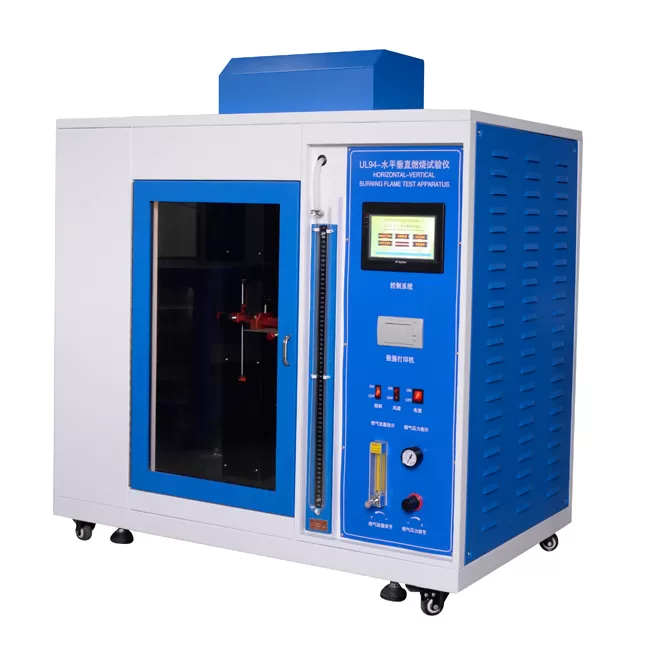
Flammability test equipment sits at the center of product safety, regulatory compliance, and material research. For manufacturers, accredited laboratories, and distributors serving international markets, selecting the right system involves more than matching a standard number. It requires an understanding of ignition behavior, heat release, smoke generation, and how each measurement supports a broader fire performance strategy. A well-configured bench-scale apparatus can reveal how a polymer, cable jacket, textile, or composite behaves under controlled fire conditions, while a poorly specified system can produce variable results that slow approvals and weaken confidence in test reports.
International performance testing programs depend on repeatable methods, traceable data, and equipment that remains stable across thousands of cycles. Buyers often compare chamber volume, gas control, software, and service support, yet the most successful projects begin with a clear definition of the materials to be evaluated, the standards to be followed, and the decisions the data must support. That foundation shapes every later choice, from ignition source selection to exhaust design and long-term calibration planning.
How Flammability Test Equipment Fits Into International Performance
Testing
Fire testing is not a single procedure. It is a family of methods that range from small-scale screening tests to instrumented combustion experiments. Each method answers a different question. A horizontal burn test may indicate whether a material self-extinguishes, while a cone calorimeter quantifies heat release rate, time to ignition, and smoke production under a controlled radiant heat flux. A limiting oxygen index system measures the minimum oxygen concentration needed to support combustion. Together, these tools help engineers predict fire risk, compare formulations, and demonstrate compliance with regional market requirements.
Ignition Sources and Test Methods
The ignition source defines the severity and realism of a test. A 50 W needle flame, a 500 W glow wire, a radiant cone heater, and a small open flame each create different thermal stress on a specimen. Choosing the wrong source can make a material appear safer or more hazardous than it is in its final application.
Needle flame and glow-wire tests evaluate resistance to small ignition sources in electronics and appliances.
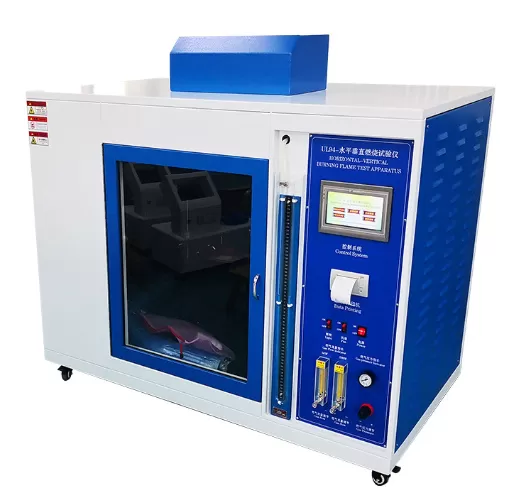
Vertical and horizontal burn tests assess flame spread, afterflame time, afterglow time, and char length.
Cone calorimetry applies a uniform radiant heat flux to measure heat release rate, mass loss rate, and effective heat of combustion.
Limiting oxygen index testing determines the oxygen concentration required to sustain candle-like burning.
Smoke density and toxicity systems quantify optical density and gas species under controlled combustion.
Key Measured Parameters
Data quality depends on how well the instrument controls and records critical variables. Temperature, airflow, gas concentration, specimen orientation, and flame application time must remain within tight tolerances. Even small deviations can shift results enough to affect a pass or fail decision.
Time to ignition and sustained ignition behavior.
Peak heat release rate and total heat release.
Mass loss rate and residual mass.
Smoke production rate and specific optical density.
Afterflame time, afterglow time, and damaged length.
Oxygen index and combustion gas composition.
Core Technologies and Instrumentation in Modern Flammability Testing
Modern systems combine mechanical precision with digital control. A flammability chamber may look simple from the outside, but its performance depends on airflow straighteners, thermocouple placement, mass flow controllers, and software algorithms that compensate for environmental changes. The best instruments make these variables visible and adjustable, so laboratory teams can validate method parameters and troubleshoot anomalies quickly.
Bench-Scale Combustion Chambers
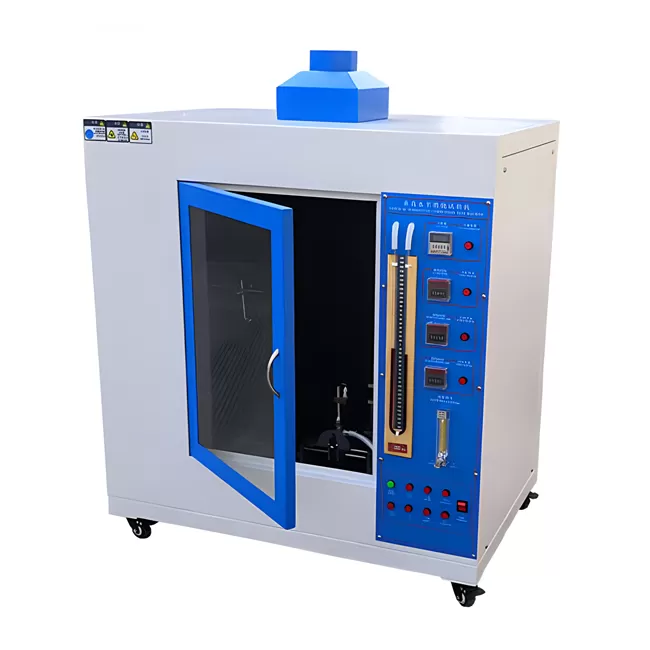
Bench-scale chambers provide a controlled environment for small specimens. They typically include a draft-free enclosure, specimen holder, adjustable ignition source, and exhaust connection. Some chambers support multiple test methods through interchangeable fixtures, which improves utilization and reduces the number of separate instruments a laboratory must maintain. Safety interlocks, door sensors, and gas shutoff valves are essential when tests involve methane, propane, or oxygen-enriched atmospheres.
Cone Calorimetry and Heat Release Rate Analysis
Cone calorimeters are among the most information-rich fire testing instruments. By exposing a specimen to a calibrated radiant heat flux, they measure oxygen consumption, heat release, smoke obscuration, and mass loss. The resulting data supports material development, fire modeling, and regulatory submissions. Accurate calibration of the oxygen analyzer, heat flux meter, and load cell is central to reliable operation. Software must also handle baseline correction, drift compensation, and calculation of derived values such as peak heat release rate and total heat release.
Limiting Oxygen Index and Oxygen Consumption Systems
Limiting oxygen index, often called LOI, is widely used for plastics, textiles, and composites. The test determines the minimum oxygen concentration in a nitrogen-oxygen mixture that sustains combustion. Precision gas mixing, stable flow control, and a consistent specimen holder are critical. Because LOI results are sensitive to specimen geometry and conditioning, laboratories benefit from standardized preparation procedures and environmental conditioning before testing.
Smoke Density, Toxicity, and Glow-Wire Testing
Smoke generation is a major contributor to fire hazard, especially in enclosed spaces such as tunnels, rail cars, and buildings. Smoke density chambers measure light obscuration as a material burns or pyrolyzes. Toxicity systems go further by analyzing effluent gases for carbon monoxide, carbon dioxide, hydrogen cyanide, and other species. Glow-wire testers evaluate whether a heated wire can ignite a material or cause sustained burning. Each of these methods requires careful attention to chamber cleaning, sensor calibration, and exhaust handling.
Applications Across Regulated Industries
Different industries prioritize different fire performance characteristics. A cable manufacturer may focus on flame spread and smoke release, while an aerospace supplier may need data on heat release and toxic gas emissions. Building material producers often require reaction-to-fire classifications, and automotive teams must address interior material flammability. The equipment portfolio should match the product roadmap, not just the current test request.
Electronics and appliances: glow-wire, needle flame, horizontal and vertical burn tests.
Cables and wire: flame propagation, smoke density, acid gas evolution, and circuit integrity.
Automotive interiors: FMVSS 302 and ISO 3795 burn rate testing.
Aerospace: heat release, smoke density, toxicity, and radiant panel tests.
Building materials: reaction-to-fire testing, ignitability, and flame spread classification.
Textiles and furniture: surface burn behavior, smoldering, and heat release.
Personal protective equipment: limited flame spread and thermal resistance evaluation.
Procurement Criteria for Flammability Test Equipment
Purchasing decisions often involve engineering, quality, safety, and finance stakeholders. A low initial price can become expensive if the system lacks method coverage, requires frequent repairs, or produces data that auditors question. A structured evaluation helps buyers compare total cost of ownership rather than acquisition cost alone.
Regulatory Alignment and Test Method Coverage
The equipment must support the exact editions of the standards used in target markets. UL 94, IEC 60695, ASTM D2863, ISO 4589, ASTM E1354, ISO 5660, ASTM D2843, ISO 5659, FMVSS 302, ISO 3795, and EN 13501-1 are common references, but their requirements vary. Confirm that fixtures, gas controls, and software calculations align with the latest published methods. When a standard is updated, the supplier should provide a clear path for upgrades rather than requiring a complete replacement.
Data Integrity, Calibration, and Traceability
Audit-ready records require more than a spreadsheet. The system should capture raw sensor signals, calibration history, operator identity, and method parameters. Traceable calibration certificates, reference materials, and controlled software access help laboratories demonstrate competence. For regulated environments, electronic records should be protected against unauthorized changes and retained according to quality management procedures.
Chamber Design, Safety, and Gas Management
Safety is a design requirement, not an accessory. Flammability testing can involve open flames, high temperatures, toxic effluents, and pressurized gases. Look for flame-resistant materials, thermal cutoffs, emergency stops, exhaust interlocks, and leak detection where appropriate. Gas delivery systems should include pressure regulators, mass flow controllers, and shutoff valves that fail safely. The chamber layout should allow safe specimen loading and cleaning without exposing operators to unnecessary hazards.
Automation, Software, and Reporting
Software influences productivity as much as the hardware. A modern interface should guide operators through method steps, prompt for calibration checks, and flag out-of-tolerance conditions. Automated reporting reduces transcription errors and speeds up review. Export options should support laboratory information management systems, statistical analysis, and long-term data archiving. When multiple instruments are used, consistent data formats simplify comparison across methods and sites.
Service, Spare Parts, and Global Support
International operations require service coverage that matches the equipment footprint. Response time, local spare parts availability, remote diagnostics, and technical documentation affect uptime. HAOEN technical specialists can review method compatibility and help define a configuration that fits current standards and future testing needs. A clear service agreement should cover preventive maintenance, calibration support, software updates, and operator training.
Common Operational Pain Points and Practical Solutions
Even well-equipped laboratories encounter variability, downtime, and documentation challenges. Understanding the root causes helps teams move from reactive troubleshooting to planned control.
Inconsistent Ignition and Flame Propagation
Variation often traces back to ignition source position, flame height, gas purity, or specimen conditioning. Establishing a daily verification procedure with a reference material can reveal drift before it affects production decisions. Fixture alignment tools and documented setup checklists reduce operator-dependent differences.
Calibration Drift and Sensor Reliability
Oxygen analyzers, thermocouples, load cells, and flow controllers can drift over time. A calibration schedule based on usage and manufacturer guidance keeps measurements within tolerance. Logging calibration results and environmental conditions helps identify whether drift is random or linked to a specific cause.
Sample Preparation Variability
Specimen thickness, moisture content, edge condition, and mounting method can change results. Standard operating procedures should define conditioning time, cutting tolerances, and handling requirements. When possible, use jigs and templates to improve consistency across operators and shifts.
Documentation Burden for Audits
Auditors expect a complete trail from sample receipt to final report. Digital records with timestamps, version-controlled methods, and audit logs reduce the effort required to demonstrate compliance. Training records and maintenance logs should be stored alongside test data so that a single review can confirm both operator competence and instrument status.
Installation, Commissioning, and Deployment Planning
Deployment success depends on site readiness. A flammability laboratory needs adequate floor space, ventilation, electrical service, gas supply, and exhaust capacity. Early coordination with facility engineers prevents costly changes after the equipment arrives.
Confirm chamber dimensions, clearances, and service access requirements.
Verify exhaust flow and scrubbing capacity for expected effluent types.
Install gas lines with appropriate regulators, purges, and leak checks.
Provide stable electrical power and grounding for sensitive electronics.
Establish environmental controls for temperature and humidity where methods require conditioning.
Schedule installation, calibration, and operator training before production testing begins.
Run reference material checks to validate method performance after commissioning.
Maintenance Strategies That Protect Flammability Test Equipment Performance
Preventive maintenance extends instrument life and protects data quality. A written schedule should cover daily, monthly, quarterly, and annual tasks, with clear ownership and escalation paths. Consumable parts such as seals, filters, thermocouples, and lamps should be stocked according to usage rates and lead times.
Daily: inspect chamber cleanliness, gas pressure, exhaust function, and safety interlocks.
Weekly: verify flow rates, check flame characteristics, and review error logs.
Monthly: clean optical sensors, inspect specimen holders, and back up software data.
Quarterly: perform calibration checks with reference standards and review drift trends.
Annually: complete comprehensive calibration, replace worn components, and update documentation.
Project teams working with HAOEN can coordinate maintenance planning, spare parts identification, and remote troubleshooting to reduce unplanned downtime. When a method changes or a new material family is introduced, the equipment configuration should be reviewed before testing begins.
Long-Term Value and Return on Testing Investment
A flammability testing program creates value beyond regulatory compliance. Reliable data shortens development cycles, reduces the risk of product recalls, and supports informed material selection. Laboratories that maintain stable instruments and well-trained operators can participate in interlaboratory comparisons, support customer audits, and expand their service portfolios. The long-term return comes from repeatability, uptime, and the confidence that test results will withstand technical and regulatory scrutiny.
Equipment that is difficult to calibrate, poorly documented, or unsupported in the field creates hidden costs. Buyers should evaluate the supplier’s ability to provide method guidance, custom fixtures, software updates, and lifecycle support. HAOEN can support custom fixture design and chamber integration for specialized specimen geometries, helping laboratories adapt to new standards without replacing the entire system.
Frequently Asked Questions
Q1: What types of products require flammability testing?
A1: Plastics, cables, electronics, appliances, automotive interiors, aerospace composites, building materials, textiles, furniture, and personal protective equipment are commonly tested. The applicable method depends on the product, its end-use environment, and the regulations of the target market.
Q2: How do I choose between horizontal and vertical burn tests?
A2: Horizontal tests generally evaluate the rate of flame spread across a specimen, while vertical tests assess self-extinguishing behavior, afterflame time, and dripping. The choice should follow the standard that governs the product category and the fire scenario the material may face.
Q3: What is the difference between limiting oxygen index and cone calorimeter testing?
A3: Limiting oxygen index measures the minimum oxygen concentration needed to sustain combustion under a controlled flow. Cone calorimetry measures heat release rate, time to ignition, mass loss, and smoke production under a radiant heat flux. They provide complementary information and are often used together.
Q4: How often should flammability test equipment be calibrated?
A4: Calibration intervals depend on usage, manufacturer guidance, and quality system requirements. Many laboratories perform daily or weekly verification checks, monthly or quarterly intermediate checks, and annual comprehensive calibration. Drift trends and audit findings may justify shorter intervals.
Q5: What site services are needed before installation?
A5: Typical requirements include adequate floor space, ventilation and exhaust, electrical power, gas supply, environmental controls, and safe access for service. Early facility planning helps avoid delays during installation and commissioning.
Q6: Can software integration improve traceability?
A6: Yes. Software that captures raw data, calibration records, operator identity, and method parameters creates a traceable record for audits and internal reviews. Export capabilities also support statistical analysis and long-term data archiving.
Q7: What maintenance tasks can be performed in-house?
A7: Daily inspections, cleaning, flow checks, and software backups are usually performed by laboratory staff. Calibration, sensor replacement, and major repairs may require trained service technicians and traceable reference standards.
Ready to strengthen your fire testing program? Contact HAOEN at 13631787342 @163.com or request a technical consultation to discuss your flammability test equipment requirements.