
Transit damage silently drains profits from supply chains around the globe. Crushed cartons, broken seals, and shattered products ruin customer relationships and create massive financial loss.
Every product encounters hazards during distribution. Rough handling, warehouse stacking, and constant vehicle vibration threaten packaging integrity at every step.
Deploying reliable packaging testing instruments gives manufacturers the data needed to prevent structural failures. HAOEN provides factory-direct testing solutions that identify design weaknesses long before products enter the logistics network.
Why Is Packaging Testing Essential for Modern Supply Chains?
Shipping environments are unpredictable. Freight travels across multiple transit modes, passing through automated sorting hubs and manual loading docks.
Without rigorous lab validation, companies rely on guesswork. Over-packaging inflates material and freight costs, while under-packaging results in high product damage rates.
Primary hazards during transport include:
Compressive Forces: Long-term static pressure in distribution centers and dynamic weight loads inside container ships.
Impact Shock: Drops during manual offloading, sorting conveyor falls, and sudden vehicle stops.
Rotational & Harmonic Vibration: Continuous mechanical movement from truck beds, rail lines, and air cargo holds.
Environmental Changes: Humidity and temperature fluctuations that weaken paper fibers and structural adhesives.
Investing in precision test equipment generates immediate financial returns. Preventing a fraction of shipping damage covers the cost of laboratory equipment while protecting your brand reputation.
Key Packaging Testing Instruments to Safeguard Your Products
Effective quality assurance requires a two-tier approach. Engineers must evaluate individual raw materials and validate finished shipping containers under simulated field conditions.
1. Packaging Material Testing Instruments (Quality Control at the Source)
Raw material quality determines structural performance. Rigorous paperboard quality control stops sub-standard raw stock from reaching the production line.
The burst strength tester measures the maximum hydraulic pressure a paper or corrugated board can withstand before rupturing. This test evaluates how well packaging resists internal or external force bursts.
Primary Application: Paperboard, corrugated sheets, and heavy-duty paper bags.
Key Advantage: Ensures outer packaging withstands internal force spikes during handling.
Crush Tester (RCT / ECT / FCT / CMT)
A multi-functional crush tester evaluates structural rigidity across various force vectors. It performs Edge Crush Tests (ECT), Ring Crush Tests (RCT), and Flat Crush Tests (FCT).
Edge Crush Test (ECT): Measures vertical strength to predict ultimate box stacking capacity.
Flat Crush Test (FCT): Evaluates flute rigidity to resist surface crushing during processing.
Ring Crush Test (RCT): Measures individual paper liner stiffness before corrugation.
Elmendorf Tear Tester
This instrument measures the force required to propagate a tear through materials like paper, plastic film, or woven sacks. It prevents tear propagation from minor edge punctures during transit.
2. Transit Simulation Testing Equipment (Real-World Environmental Tests)
Once material forms a complete container, real-world simulation equipment evaluates total protective capability.
Box Compression Tester (BCT)
The box compression tester applies controlled compressive loads to full-sized corrugated boxes. It measures ultimate crush strength and load deformation over time.
Simulates long-term warehouse stacking conditions.
Determines safety factors across varying humidity levels.
Validates structural integrity without over-spending on raw materials.
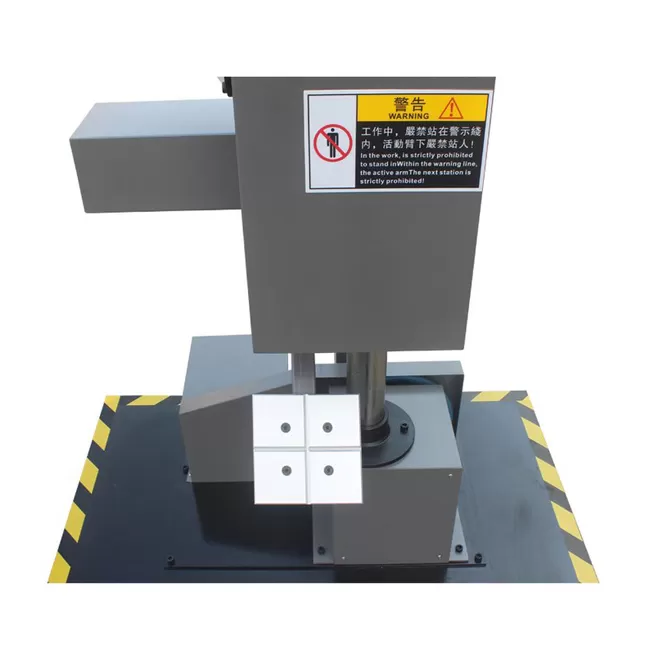
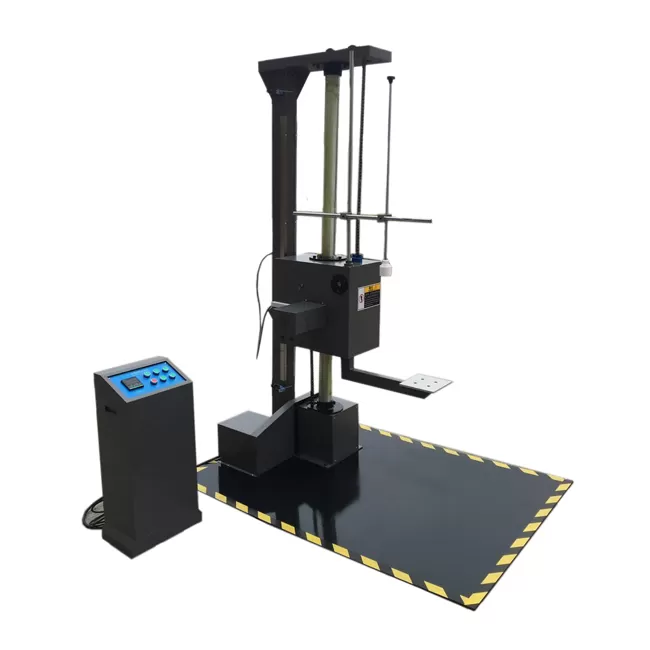
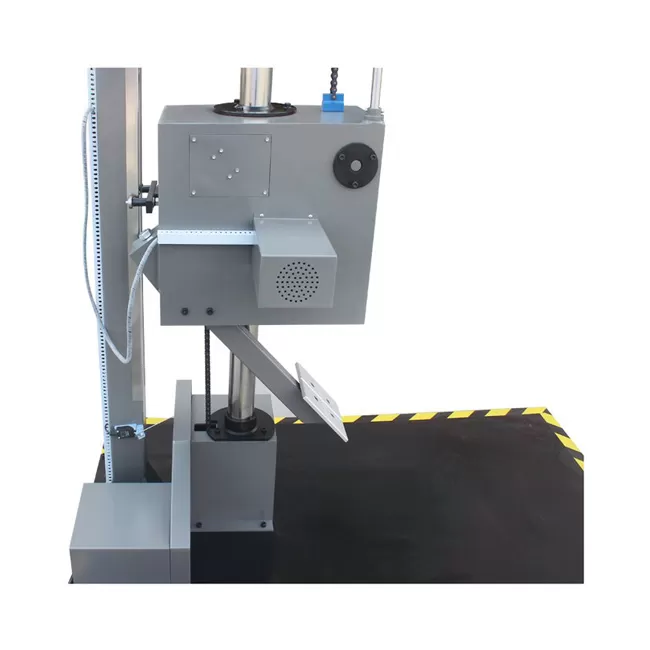
A package drop tester reproduces impact shocks from drops during loading, unloading, and parcel handling. Single-arm and dual-arm models drop packaged products from specific heights onto rigid surfaces.
Tests corner, edge, and flat face impacts.
Identifies internal cushioning failures and product damage.
Essential for validating e-commerce parcel shipping designs.
Transit Vibration Test Machine
Road conditions create continuous vibration frequencies that loosen fasteners, scuff printed surfaces, and stress package seams. A transit vibration test machine replicates transport frequency spectra in a laboratory setting.
Simulates fixed-displacement rotary vibration or random vibration profiles.
Exposes internal wear, seal ruptures, and material fatigue.
Verifies package stability during long-distance trucking runs.
Meeting International Standards (ISTA, ASTM, ISO, TAPPI)
Global supply chains rely on standardized testing protocols to align manufacturers, logistics providers, and retailers. Using compliant machinery ensures valid, repeatable test results.
HAOEN designs carton box test equipment to meet major international test standards:
ISTA Packaging Testing Standards: Protocols like ISTA 1A, 2A, and 3A simulate real distribution hazards for parcel and bulk shipping.
ASTM D4169: A standard framework for performance testing of shipping containers and systems.
ISO Standards: International protocols including ISO 2248 (Drop Testing) and ISO 12048 (Compression Testing).
TAPPI Standards: Benchmark methods like TAPPI T 810 (Bursting Strength) and TAPPI T 811 (Edge Crush).
Standardized testing helps manufacturers satisfy strict compliance demands from major global retailers, reducing claims and chargebacks.
Why Choose HAOEN as Your Packaging Testing Partner?
Selecting reliable testing hardware requires choosing an experienced manufacturer. HAOEN combines deep engineering experience with complete factory manufacturing capabilities.
13+ Years of R&D Expertise
As a recognized high-tech
enterprise, HAOEN specializes in environmental and mechanical reliability test
machinery. Years of research ensure equipment delivers accurate measurements
year after year.
Factory-Direct Pricing & Cost Efficiency
HAOEN
operates its own manufacturing plant. Selling directly from the factory
eliminates middleman markups, giving customers high-grade equipment at
competitive prices.
Robust Production & Fast Delivery
Equipped with
modern production lines, HAOEN maintains strong output capacity. Standard
equipment ships within 7 to 15 days, minimizing downtime for quality control
upgrades.
End-to-End Quality Control
Every system undergoes strict
multi-stage inspection before dispatch. In-house testing labs verify sensor
precision, structural alignment, and software stability on every build.
Global Reach & Multi-National Certifications
Serving
customers across more than 50 countries, HAOEN machinery carries full
international certifications. Dedicated export teams manage smooth shipping and
customs compliance worldwide.
Full OEM/ODM & 24/7 Support
Standard designs do not
fit every requirement. HAOEN provides custom platen sizes, weight capacities,
and specialized testing software, backed by 24/7 technical support.
Frequently Asked Questions (FAQ)
Q1: What is the difference between Edge Crush Test (ECT) and Box
Compression Test (BCT)?
A1: ECT measures the compressive strength of
the corrugated board edge itself, focusing on material performance. BCT measures
the compressive capacity of the entire assembled carton box, taking structure,
fluting, crease lines, and box geometry into account.
Q2: Why are ISTA packaging testing standards important for global
shipping?
A2: ISTA standards provide uniform test procedures that
replicate real-world transit stress. Passing ISTA tests proves packaging
protects contents, helping satisfy retailer requirements and reducing freight
damage claims.
Q3: How often should packaging testing instruments be
calibrated?
A3: Calibrate high-use laboratory instruments once every
12 months. Regular calibration maintains sensor accuracy, satisfies ISO audit
standards, and prevents inconsistent test data.
Q4: Can HAOEN customize testing equipment for non-standard package
sizes?
A4: Yes. HAOEN offers OEM/ODM services to adjust working
platens, weight limits, drop heights, and control interfaces based on specific
customer requirements.
Q5: Which instrument best predicts warehouse box stacking
failure?
A5: A Box Compression Tester (BCT) combined with Edge Crush
Testing (ECT) offers the best data. BCT measures maximum stacking load capacity,
while ECT confirms raw sheet quality before box conversion.
Protect Your Supply Chain with HAOEN
Preventing transit damage starts with accurate laboratory testing. Investing in robust packaging testing instruments eliminates product failure risks, protects profits, and keeps customer satisfaction high.
HAOEN supplies factory-direct, highly reliable test equipment tailored to modern manufacturing requirements.
Contact HAOEN today to request a factory-direct quote and consult with our technical specialists on your application.