
Global supply chains face major operational shifts in 2026. E-commerce shipping volume continues to expand, raising return rates driven by product damage during transit. At the same time, environmental regulations force packaging manufacturers to replace traditional plastics with recycled paperboard and lightweight corrugated materials.
Sustainable packaging options reduce environmental footprints, but they create structural challenges. Recycled fibers are shorter, which lowers overall tensile and crush strength. Without precise quality control, shipping boxes buckle under warehouse stacking pressure, and sensitive electronics suffer shock damage during handling.
To comply with updated ISTA, ASTM, and ISO regulations, quality control managers need accurate testing data. Selecting the right packaging testing equipment prevents costly damage claims and protects brand reputation. Operating out of Dongguan, HAOEN brings over 13 years of manufacturing expertise to help global buyers solve complex packaging reliability challenges.
Category 1: Packaging Material Performance Testing Equipment
Raw material testing is the first line of defense in packaging quality control. Evaluating paper and corrugated board properties before mass production prevents defective material from reaching the packaging line.
Burst Strength Tester
Bursting strength indicates how much hydraulic pressure paperboard tolerates before rupturing. This measurement reflects a box's ability to resist internal forces and rough handling during transit.
Target Applications: Single-wall, double-wall corrugated boards, kraft paper, and solid fiberboard.
Industry Standards: ISO 2759, GB/T 6545, TAPPI T810.
HAOEN Advantage: HAOEN burst strength testers feature high-precision pressure sensors, automatic hydraulic clamping, and digital micro-controllers that record peak burst values instantly.
Crush Tester (ECT, FCT, RCT, PAT)
Compressive strength testing measures how paperboard structural designs withstand multi-directional force. These metrics directly influence warehouse stacking limits.
Edge Crush Test (ECT): Evaluates vertical ring strength along the fluting axis. ECT values predict final box compression strength.
Flat Crush Test (FCT): Measures flute resistance against perpendicular forces applied to the board surface.
Ring Crush Test (RCT): Assesses the circumferential rigidity of base paper strips before corrugated assembly.
Pin Adhesion Test (PAT): Tests the bond strength between the linerboard and corrugated flutes.
Tear and Folding Endurance Testers
Flexible packaging, kraft shopping bags, and heavy-duty paper wraps experience continuous bending during sorting. Elmendorf tear testers measure the force required to tear pre-cut paper samples. Folding endurance instruments determine how many double-folds paper withstands before fracturing, ensuring material durability across logistics networks.
Category 2: Transportation & Environmental Reliability Testing Equipment
Material testing alone cannot guarantee full package integrity. Finished shipping units must undergo physical simulation tests to prove they survive real-world transport conditions.
Packaging Drop Test Machine
Manual handling, conveyor transfer, and delivery drops introduce sharp impacts. Drop testing machines evaluate how effectively external packaging absorbs kinetic energy to protect internal cargo.
Single-Arm Drop Tester: Ideal for small consumer electronics, cosmetic boxes, and FMCG packaging.
Double-Arm Drop Tester: Built for large, heavy packages, pallets, and bulk wooden crates.
Compliance: Replicates standard free-fall test protocols under ISTA 1A, ISTA 2A, and ASTM D5276.
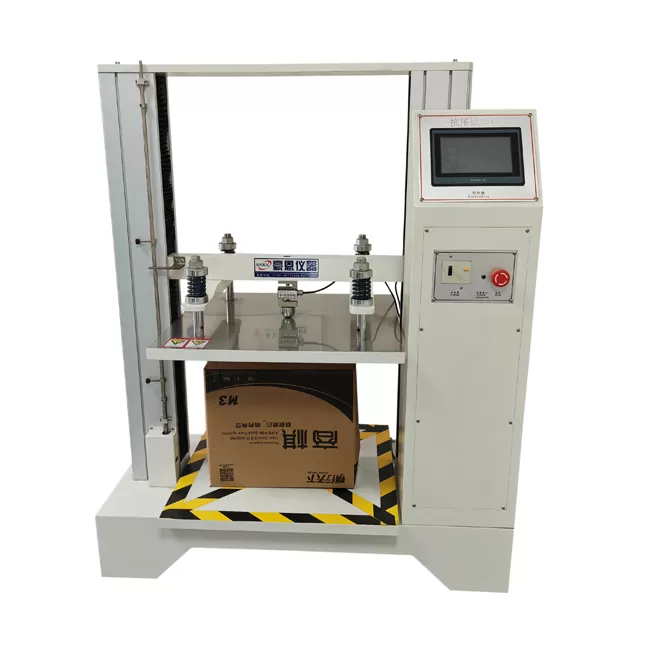
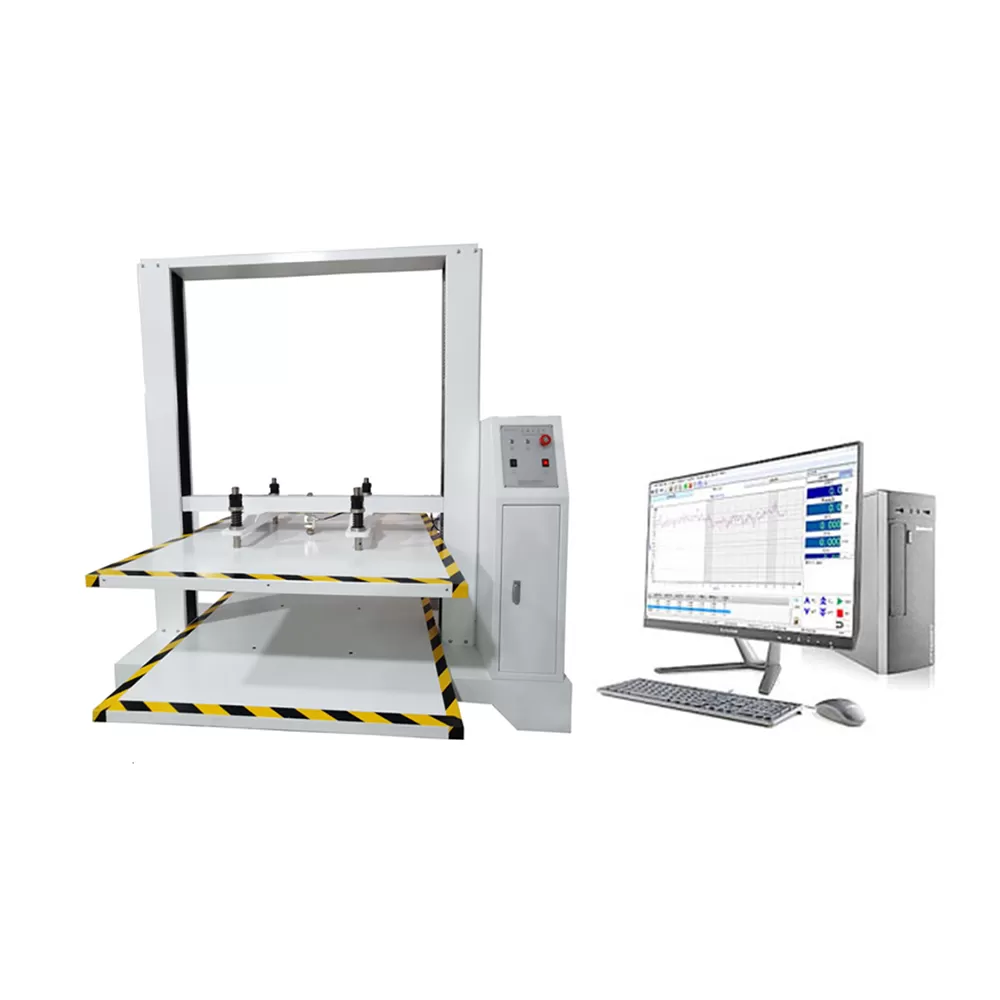
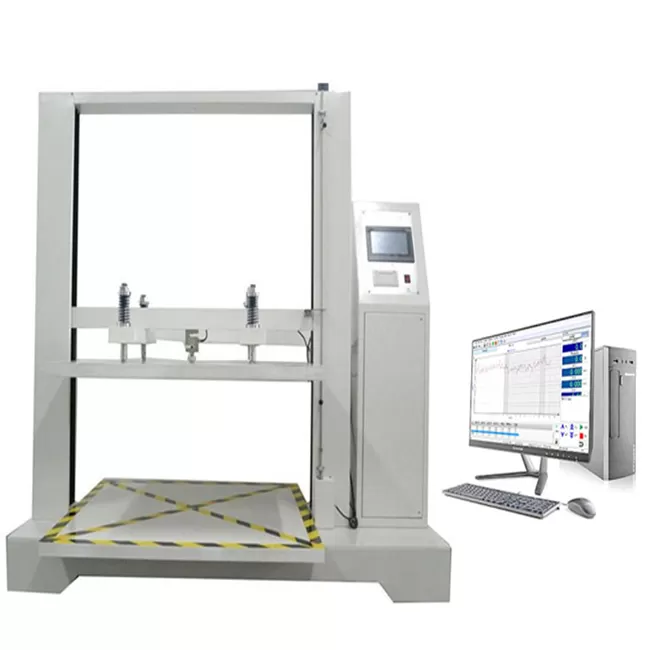
Box Compression Tester (BCT)
Warehouse stacking places heavy static loads on bottom-tier packages over long periods. A box compression tester applies top-down crushing force until structural deformation occurs.
HAOEN box compression testers use high-torque servo motors paired with heavy-duty ball screws. The integrated digital controller captures initial deformation, yield point, and peak load curves automatically, assisting structural engineers in optimizing box wall thickness.
Transportation Simulation Vibration Table
Freight vehicles expose cargo to continuous harmonic vibration. Road vibration loosens internal fasteners, scuffs product surfaces, and degrades box joints. Fixed-frequency and variable-frequency vibration tables simulate truck, rail, and air transit conditions according to ASTM D999 specifications.
Environmental Simulation Chamber
Paperboard absorbs atmospheric moisture easily. High relative humidity softens corrugated fluting, causing stacked boxes to collapse in tropical shipping lanes. Temperature and humidity test chambers simulate extreme climate transitions, allowing quality control teams to observe material degradation before export.
2026 Selection Trends: Eco-Friendly Packaging and Smart Testing
Sustainable materials behave differently than virgin paperboard. Recycled paper contains variable fiber lengths, inconsistent density, and unpredictable moisture retention. These physical variations require packaging testing equipment with enhanced sensor sensitivity and repeatable load application.
Modern HAOEN packaging testing instruments utilize digital signal processing to detect minor structural yield points. This allows lab technicians to test thin-walled recycled boxes without getting false readings caused by machine vibration.
Smart lab integration drives modern B2B purchasing decisions. Quality managers no longer accept manual handwritten logs. HAOEN testing machines support USB data exports, RS232 communication, and LabVIEW integration, enabling factories to upload test reports directly to central ERP and MES systems for total ISO audit compliance.
B2B Buyer Checklist: Why Choose HAOEN?
Selecting a long-term equipment supplier requires careful evaluation of technical capabilities, factory credentials, and post-sale service support. B2B buyers should evaluate manufacturers against key operational criteria:
13+ Years of Manufacturing Experience: Founded in Dongguan, HAOEN operates as a certified National High-Tech Enterprise specializing in material testing instrumentation.
Global Standard Compliance: HAOEN equipment fully adheres to international testing standards, including ASTM, ISO, TAPPI, ISTA, JIS, and DIN.
Factory-Direct Customization: Sourcing directly from the origin factory removes distributor markup and grants access to tailored OEM/ODM engineering solutions.
Full Lifecycle Technical Support: HAOEN provides complete installation guidance, factory calibration services, and spare parts delivery to maintain lab uptime.
Comparison Table: Key Instrument Applications
| Equipment Type | Primary Test Metric | Main Application | Relevant Standard |
|---|---|---|---|
| Burst Strength Tester | Hydraulic Burst Pressure (kPa) | Paperboard rupture resistance | ISO 2759 / GB/T 6545 |
| Edge Crush Tester (ECT) | Compressive Force / Length (kN/m) | Corrugated flute structural strength | ISO 3037 / TAPPI T818 |
| Box Compression Tester (BCT) | Top-Down Crush Force (kN) | Finished box warehouse stacking capacity | ASTM D642 / ISO 12048 |
| Drop Test Machine | Impact Energy / Height Resistance (m) | Transit handling and shock impact safety | ISTA 1A/2A / ASTM D5276 |
| Vibration Table | Harmonic Resonance / Fatigue | Long-haul freight simulation | ASTM D999 / ISO 2247 |
Frequently Asked Questions (FAQ)
Q1: What is the primary functional difference between ECT and BCT testing?
A1: Edge Crush Testing (ECT) measures the raw strength of a small corrugated board sample along its fluting edge. Box Compression Testing (BCT) evaluates the load-bearing capacity of an entire assembled box. ECT measures material quality, while BCT measures total structural performance, including box design, creasing, and slotting.
Q2: How frequently should laboratory packaging testing equipment be calibrated?
A2: Industrial standards recommend calibrating mechanical and digital testing equipment once every 12 months. Facilities running high-volume continuous testing should recalibrate load cells and pressure sensors every 6 months to guarantee measurement accuracy.
Q3: Do HAOEN drop testers and vibration tables comply with official ISTA standards?
A3: Yes. HAOEN transportation simulation equipment, including single-arm drop testers, double-arm drop testers, and vibration tables, fully aligns with ISTA 1A, 2A, 3A, and ASTM D5276 protocol specifications.
Q4: Can HAOEN packaging testing instruments accurately measure lightweight recycled paperboard?
A4: Yes. HAOEN equips its high-precision packaging testing equipment with ultra-sensitive servo motors and high-resolution digital sensors. These components capture subtle yield points and micro-deformations typical in recycled paper materials.
Q5: What lead times and warranty coverage does HAOEN offer for international orders?
A5: Standard testing instruments ship within 7 to 15 business days following order confirmation. Custom units require 20 to 30 days. HAOEN provides a comprehensive 12-month warranty along with lifetime remote technical support and calibration assistance.
Build a Safe Supply Chain with HAOEN
Choosing the correct packaging testing equipment is critical for protecting products, reducing shipping damage, and controlling material costs in 2026. Precise lab testing helps paper manufacturers, packaging plants, and third-party labs verify compliance before products enter transit.
HAOEN delivers reliable, factory-direct testing instruments backed by 13+ years of engineering experience. Upgrade your quality control lab today to lower return rates and meet demanding global shipping standards.
Ready to upgrade your lab? Contact the HAOEN engineering team today to request a detailed product catalog and receive a free quote tailored to your testing requirements.