
Packaging performance requirements are shifting rapidly. Logistics networks demand lighter corrugated boxes, but storage conditions still require maximum stack stability. Manufacturers must measure paperboard, flute structural integrity, and plastic containers under exact compressive forces.
Buying an industrial crush tester machine in 2026 requires looking beyond basic hardware price tags. Quality assurance managers need smart, versatile, and highly accurate testing machinery that operates without downtime.
With over 13 years of engineering expertise as a national high-tech enterprise, HAOEN manufactures high-precision paper and packaging test equipment. Based on real-world factory feedback, here are the top five features you must prioritize when upgrading your testing laboratory.
1. Multi-Standard Versatility for Diverse Testing Methods
Single-purpose testing machines drain lab budgets and take up valuable workbench space. Modern quality control demands a multi-functional digital crush strength tester that handles several test standards through quick-change modular fixtures.
Your equipment should accommodate a wide range of test modes on a single platform:
Ring Crush Test (RCT): Measures the compressive resistance of paperboard strips used in corrugated box manufacturing (ISO 12192, TAPPI T822).
Edge Crush Test (ECT): Evaluates the cross-directional compressive strength of corrugated board samples (ISO 3037, TAPPI T811).
Flat Crush Test (FCT): Assesses the rigidity of corrugated fluting under perpendicular loads (ISO 3035, TAPPI T825).
Pin Adhesion Test (PAT): Tests the adhesive bond strength between corrugated medium and linerboard (TAPPI T821).
Corrugated Medium Test (CCT/CMT): Evaluates crushed fluting strength before box assembly.
HAOEN designs TAPPI/ISO compliant crush testing equipment equipped with fast-locking fixture plates. Laboratory technicians switch between ECT, RCT, and PAT tests in seconds. This flexibility reduces total equipment investments while expanding your laboratory's testing scope.
2. High-Precision Load Cells and AC Servo Control Systems
Accuracy determines whether your packaging survives transit or collapses in humid storage. Lightweight recycled paper fibers display subtle force variations during compression. Your testing machine must capture these micro-stresses without signal noise.
When selecting a machine, evaluate the core mechanical components:
Force Sensor Accuracy: Demand Class 0.5 or better load cells with high-frequency data sampling rates.
AC Servo Motor Drives: Step motors vibrate and jerk during low-speed force application. AC servo motors deliver continuous, smooth torque across all speed ranges.
Precision Ball Screws: Dual heavy-duty ball screws eliminate mechanical backlash and platen tilt, ensuring steady loading speed.
HAOEN draws on 13+ years of mechanical reliability testing experience. Our HAOEN high-precision crush tester utilizes premium load sensors and customized AC servo drive mechanisms. The machinery logs minor structural deformations accurately, ensuring your material quality control remains bulletproof.
3. Smart Data Processing, Software, and LIMS Connectivity
Smart manufacturing demands digital traceability. Manual data logging on paper sheets creates transcription errors and delays batch releases. An industrial crush tester machine operating in 2026 must integrate directly into smart factory workflows.
Essential software functions include:
Real-time graphical displays showing force-displacement and force-time curves.
Automated calculation of peak load, deformation percentage, and compressive index.
Instant export of test reports in PDF, CSV, or Excel formats.
Seamless connection to Laboratory Information Management Systems (LIMS) and Enterprise Resource Planning (ERP) networks.
Automatic overload shutdown and sudden power-off memory protection.
HAOEN equips every crush testing instrument with proprietary, user-friendly software. The software supports multiple operational languages and maintains full audit trails. Factory managers track quality trends across production shifts and retrieve historic batch data instantly.
4. Ergonomic, Safe, and Heavy-Duty Machine Construction
Industrial testing environments subject equipment to constant daily use. High-volume carton factories require rugged frame architecture to prevent structural flexing during high-force tests.
Look for structural safety and ergonomic design elements:
Heavy Rigid Frames: Solid guide columns keep the upper pressing platen strictly parallel to the lower plate under peak loads.
Multi-Tiered Safety Controls: Hardware limit switches, software force caps, and prominent emergency stop buttons protect operators and sensors.
Clear Ergonomics: Open access testing spaces allow operators to place delicate paper samples quickly without finger pinch hazards.
As a leading Chinese equipment manufacturer, HAOEN constructs robust testing frames using high-grade structural alloys. Our machines withstand heavy operational loads over decades, reducing maintenance costs and eliminating measurement drift caused by frame distortion.
5. Complete Lifecycle Calibration and After-Sales Support
Hardware quality is only half the equation. Uncalibrated crush testing equipment yields unreliable data, leading to costly product returns or wasted raw materials. Selecting a vendor requires auditing their complete service ecosystem.
Verify that your equipment supplier offers comprehensive long-term support:
Factory-certified calibration certificates traceable to international standards (ISO/IEC 17025).
Rapid spare parts availability and fast technical support response times.
Preventive maintenance schedules and remote diagnostic assistance.
Operator training resources for new quality control staff.
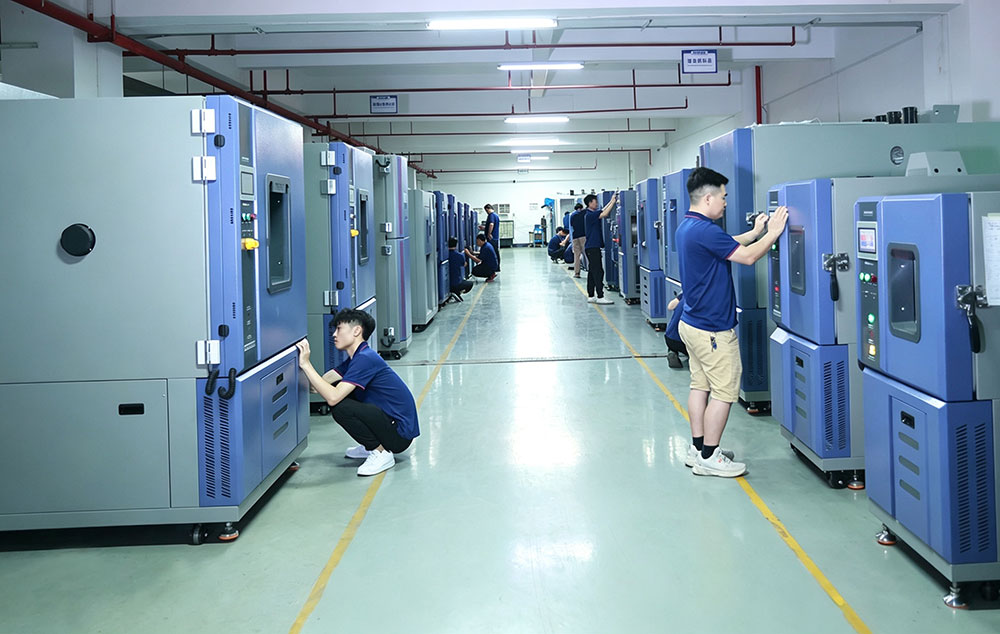
HAOEN acts as a full-service testing partner rather than a simple hardware vendor. From initial equipment design and manufacturing to installation, calibration, and long-term maintenance, HAOEN ensures your lab equipment delivers reliable results year after year.
Frequently Asked Questions (FAQ)
Q1: What is the primary difference between ECT and RCT in crush
testing?
A1: Edge Crush Test (ECT) measures the
cross-directional compressive strength of short, assembled corrugated board
samples. Ring Crush Test (RCT) measures the compressive force resistance of thin
paperboard strips held in a ring fixture before the paper is made into
corrugated board.
Q2: Why is an AC servo motor preferred over a standard motor in an
industrial crush tester machine?
A2: AC servo
motors provide linear speed control, instant stop responsiveness, and smooth
torque application without mechanical vibration. This guarantees that force
measurements reflect true material properties rather than machine noise.
Q3: Does HAOEN supply specialized testing fixtures for custom
paperboard shapes?
A3: Yes. HAOEN designs and
manufactures custom clamping fixtures, platens, and adapters tailored to unique
package geometries, plastic components, or non-standard test methods.
Q4: How frequently should a packaging crush tester undergo
calibration?
A4: International quality standards
like TAPPI and ISO recommend calibrating force sensors and displacement
indicators at least once every 12 months. High-volume testing facilities should
schedule bi-annual calibrations.
Q5: Can test results from HAOEN machines be exported automatically to
our LIMS system?
A5: Yes. HAOEN test software
features built-in network communication protocols. You can automatically output
raw data, curve graphs, and statistical reports to your central LIMS or local
server network.
Upgrade Your Laboratory Quality Control with HAOEN
Selecting an industrial crush tester machine in 2026 is an investment in your product's market reputation. Choosing a machine with multi-test versatility, high-precision drive mechanics, intuitive software, and heavy-duty frame design ensures accurate material testing every time.
Backed by over 13 years of specialized R&D experience, HAOEN continues to engineer dependable paper and packaging test equipment for global industries. Our full-cycle approach—spanning design, manufacturing, calibration, and after-sales service—delivers complete testing confidence.
Ready to enhance your packaging quality control process? Contact the HAOEN engineering team today to request a tailored equipment quote and discuss your specific testing requirements!