
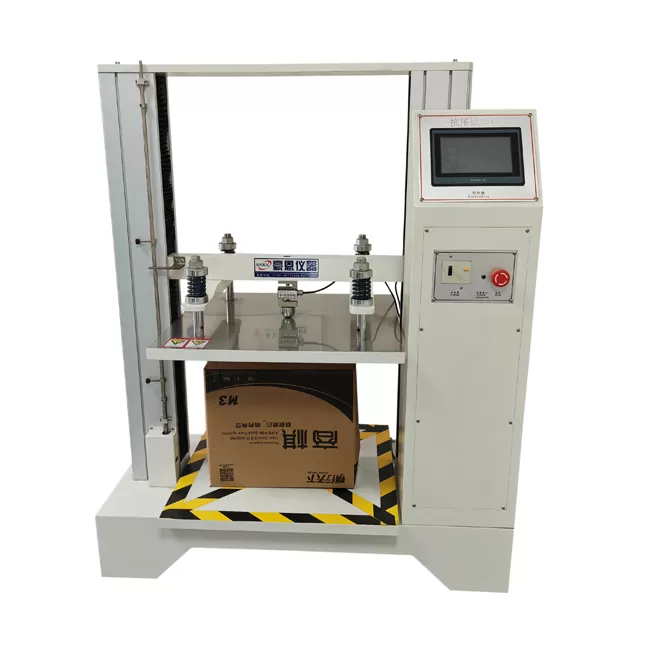
Paper mills, packaging manufacturers, and independent testing facilities rely heavily on accurate strength evaluations. Among the various quality tests, the Ring Crush Test (RCT) stands out as a fundamental measurement for paperboard strength. The right paper ring crush resistance tester gives quality control teams the exact data needed to balance product performance and material costs.
Choosing an instrument for your laboratory requires careful evaluation of technical specifications, industry compliance, and long-term serviceability. Leading manufacturers like HAOEN provide modern testing solutions designed to eliminate measurement errors. This guide breaks down everything you must consider before purchasing a ring crush tester for your facility.
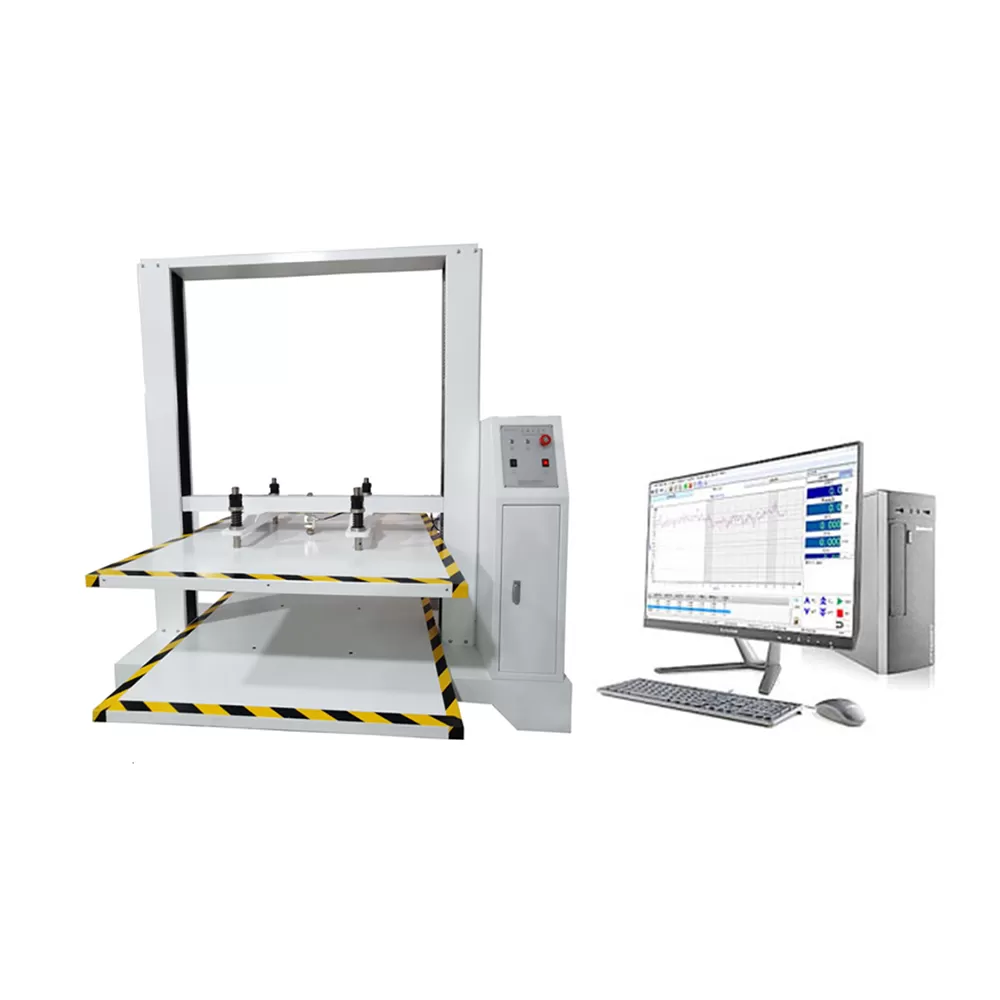
Why the Ring Crush Test Matters for Paper Laboratories
The Ring Crush Test measures the edgewise compression resistance of paper and paperboard formed into a cylindrical ring. This test primarily evaluates linerboard and fluting medium before converting these materials into corrugated board. Understanding this metric allows manufacturers to predict how finished containers will perform under vertical stacking loads.
Paper strength directly influences the final Box Compression Test (BCT) and Edge Crush Test (ECT) results. If your raw paper lacks sufficient stiffness, the final box will buckle under weight. Conversely, using overly thick paper wastes money and raw materials.
A reliable ring crush tester helps your laboratory achieve two vital operational goals:
Consistent Quality Control: Verify that incoming paper rolls meet purchase specifications before production begins.
Cost Optimization: Avoid over-engineering paperboard grades while preventing structural failures in shipment.
Investing in precision paper lab testing equipment prevents costly claims from customers who experience crushed corrugated boxes. Selecting a machine built for daily laboratory use ensures your test data remains stable across shifts.
5 Critical Factors When Choosing a Ring Crush Tester
Laboratory managers must evaluate several technical parameters when comparing instruments on the market. Selecting a system based solely on price often leads to frequent recalibration, high maintenance costs, and inaccurate test values.
1. Sensor Precision and Load Cell Stability
The heart of any compression tester is its force sensor system. Paper samples yield rapidly under compressive load, requiring the instrument to capture minute changes in force within milliseconds.
Look for instruments equipped with high-precision load cells that feature low hysteresis and high repeatability. Driven by advanced stepper or servo motors, top-tier testing units maintain smooth, vibration-free platen movement. Stable drive systems prevent artificial force spikes caused by mechanical jitter.
Repeatability and Reproducibility (R&R) are non-negotiable in paper testing. Your lab needs an RCT instrument that yields identical force readings when testing identical paper strips under uniform conditions.
2. Strict Compliance with International Standards
Your testing data must carry weight with clients and regulatory bodies across the globe. Therefore, your instrument must fully satisfy major global paper testing standards, including:
ISO 12192: Paper and board — Determination of ring crush resistance.
TAPPI T822: Ring crush of paperboard (rigid support method).
GB/T 2679.8: Paper and board — Determination of ring crush resistance.
JIS P8126: Paper and board — Determination of compression strength — Ring crush method.
Compliance depends heavily on the specimen holder, often called the central disc or sample holder. The base platen must accept standardized ring crush holders with matching groove dimensions. Standardized slots keep paper specimens formed into exact circles without pinching or distortion.
3. Automation, Interface, and Data Handling
Modern paper testing requires fast throughput and effortless data collection. Manual calculation leaves room for human error and slows down testing routines.
Select a modern paper compression strength tester equipped with a intuitive touchscreen interface. One-touch operations allow operators to clamp the sample, run the test, and watch the upper platen automatically return to its starting position.
Data export capabilities matter just as much as test execution. Look for machines that offer:
Built-in micro-printers for immediate physical test receipts.
Data export options via USB or RS232 in Excel or PDF formats.
Seamless integration with Laboratory Information Management Systems (LIMS).
4. Structural Rigidity and Built-in Safety Features
Compressive force tests generate significant reaction forces inside the machine frame. If the frame flexes during loading, the platens lose parallelism, introducing severe bending forces into the paper sample. This deflection invalidates your test data.
High-grade instruments use heavy-gauge steel structures and precision-ground lead screws to maintain rigidity. Furthermore, safety protocols protect both your operators and the internal components:
Overload Protection: Automatically stops the motor if force exceeds cell capacity.
Travel Limit Switches: Prevents physical contact between the top and bottom platens.
Emergency Stop Buttons: Positioned within easy reach on the front panel.
5. Calibration Services and After-Sales Support
Testing equipment requires periodic verification to ensure long-term accuracy. A common industry saying applies here: testing instruments are only as good as their calibration.
Choose an equipment supplier that offers comprehensive metrology support, spare parts availability, and prompt technical guidance. A vendor that offers calibrated proving rings or standard force verification tools ensures your lab remains compliant during external audits.
Expanding Laboratory Capabilities with Multi-Test Modularity
Dedicated single-purpose instruments consume valuable workbench space. Many paper labs prefer multi-functional compression testers that handle several standard paperboard tests through interchangeable fixtures.
By simply changing the testing grips and selecting a different menu option, a versatile ring crush tester can execute:
Edge Crush Test (ECT): Evaluates the vertical crushing resistance of corrugated board samples.
Flat Crush Test (FCT): Measures the compression strength of corrugated fluting under flat loads.
Pin Adhesion Test (PAT): Assesses the bond strength between the linerboard and corrugated medium.
Small Tube Test: Checks the radial crush strength of small paper cores and tubes.
Investing in a modular compression system from HAOEN saves lab space and significantly reduces overall equipment capital expenditure. Operators master one software interface while running multiple test standards.
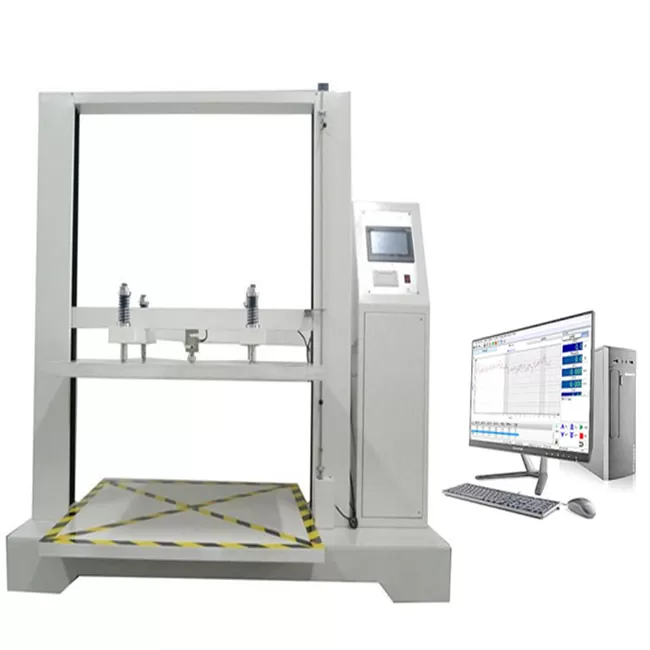
Why Paper Testing Laboratories Trust HAOEN
Selecting the right brand ensures your paper laboratory operates without costly downtime. HAOEN has established itself as a leading global manufacturer of material testing instruments, specializing in paper and packaging evaluation systems.
As a certified high-tech enterprise, HAOEN oversees the full equipment lifecycle, including research and development, mechanical manufacturing, system assembly, calibration, and worldwide sales. Every HAOEN ring crush tester undergoes rigorous factory calibration before dispatch.
Key advantages of choosing HAOEN include:
Global Standard Compliance: Equipment built strictly according to TAPPI, ISO, ASTM, and JIS guidelines.
Robust Engineering: High-rigidity frames and precision load cells ensure long service life and repeatable results.
End-to-End Support: Dedicated technical support, software updates, and reliable spare parts supply.
Leading paper mills, third-party inspection agencies, and corrugated packaging converters count on HAOEN to deliver clear, precise testing data every single day.
Frequently Asked Questions (FAQ)
Q1: What is the main difference between RCT and ECT
testing?
A1: The Ring Crush Test (RCT) measures the
compressive strength of a single sheet of paper or paperboard bent into a ring.
The Edge Crush Test (ECT) measures the vertical compressive resistance of a
multi-layer corrugated board structure. RCT tests raw materials, whereas ECT
tests converted corrugated board.
Q2: What accessories are required to perform an ISO 12192 ring crush
test?
A2: You need a precision sample cutter that
cuts paper strips to exact dimensions (typically 152.4 mm x 12.7 mm) and
standard specimen holders (central discs) with designated slot widths matching
the paper thickness.
Q3: How often should we calibrate our paper compression
tester?
A3: Most laboratory quality standards
require calibration at least once every 12 months. However, facilities running
continuous multi-shift operations often perform force verifications every six
months using a certified load cell or proving ring.
Q4: Can a ring crush tester perform tests directly on corrugated
board?
A4: No, RCT is designed specifically for
paper and paperboard sheets. To test corrugated board directly, you replace the
ring crush sample holder with edge crush blocks, flat crush platens, or pin
adhesion fixtures.
Q5: Why is platen parallelism so important in an RCT
instrument?
A5: Non-parallel platens apply force
unevenly across the top edge of the paper ring. This uneven load causes
premature localized failure, resulting in artificially low strength readings
that do not reflect true paper quality.
Upgrade Your Paper Testing Capabilities Today
Choosing the best ring crush tester requires balancing sensor precision, structural durability, software usability, and international standard compliance. Equipping your facility with top-tier paper lab testing equipment ensures accurate strength monitoring, reduces material waste, and prevents box failure claims.
HAOEN provides tailored paper testing solutions engineered to meet demanding laboratory environments. Contact HAOEN’s technical sales team today to request detailed product specifications, arrange a demonstration, or receive a competitive quote on our precision ring crush testers.