
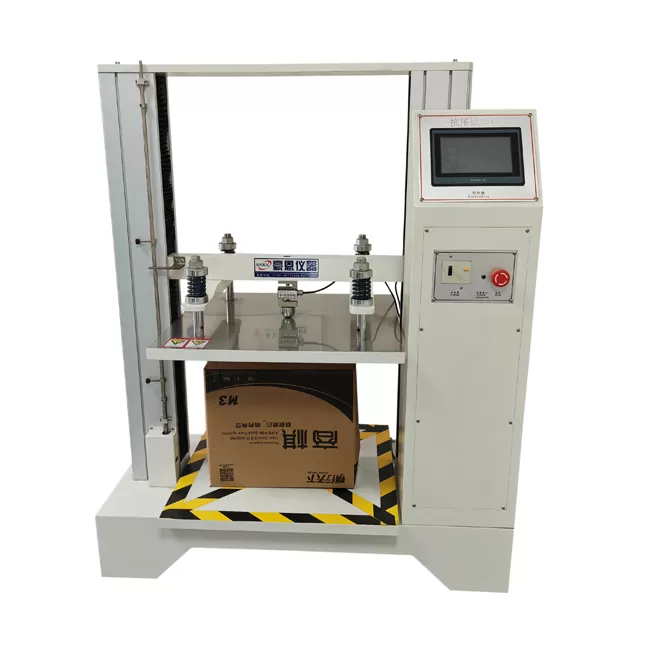
Paper and paperboard materials undergo severe mechanical stress during processing, converting, and final distribution. Industrial packaging suppliers, paper mills, and converting operations require absolute quantitative verification of fiber strength, ply bonding, absorbency, and structural resistance. A high-precision paper testing machine serves as the foundation for modern quality control, enabling manufacturers to characterize material performance against rigorous global standards.
Substandard paper quality leads to box crushing, joint failures, feed jams on high-speed converting lines, and compromised moisture barrier performance. By applying precise physical forces under controlled laboratory environments, modern testing instrumentation translates complex polymeric fiber interactions into standardized, actionable metrics. Understanding the mechanical architecture, measurement protocols, and standards governing these instruments is necessary for establishing repeatable production outcomes.
Mechanical Metrics in Paper Physical Property Evaluation
Determining the mechanical capability of paper involves evaluating structural performance under tensile, compressive, hydraulic, and surface-level stress vectors. Each physical parameter correlates directly with raw material fiber length, refining intensity, binder distribution, and web orientation.
Tensile Properties and Strain Behavior
Tensile performance defines the force required to rupture a specimen strip under uniaxial load. Testing adheres to standardized frameworks such as ISO 1924 and TAPPI T 494, which mandate a Constant Rate of Elongation (CRE) load frame. Key parameters extracted during this process include:
Tensile Strength: The maximum tensile force per unit width recorded prior to material rupture, expressed in kilonewtons per meter (kN/m).
Tensile Energy Absorption (TEA): The total work performed per unit surface area to stretch the paper strip to its breaking point, representing the toughness of the paper web under dynamic impact loading.
Break Elongation: The percentage increase in specimen length achieved at the point of fracture, reflecting the elasticity imparted by fiber micro-creping and inter-fiber bonding.
Tensile Stiffness Index: The maximum slope of the stress-strain curve normalized by basis weight, indicating structural resistance to elastic deformation.
Hydraulic Bursting Resistance
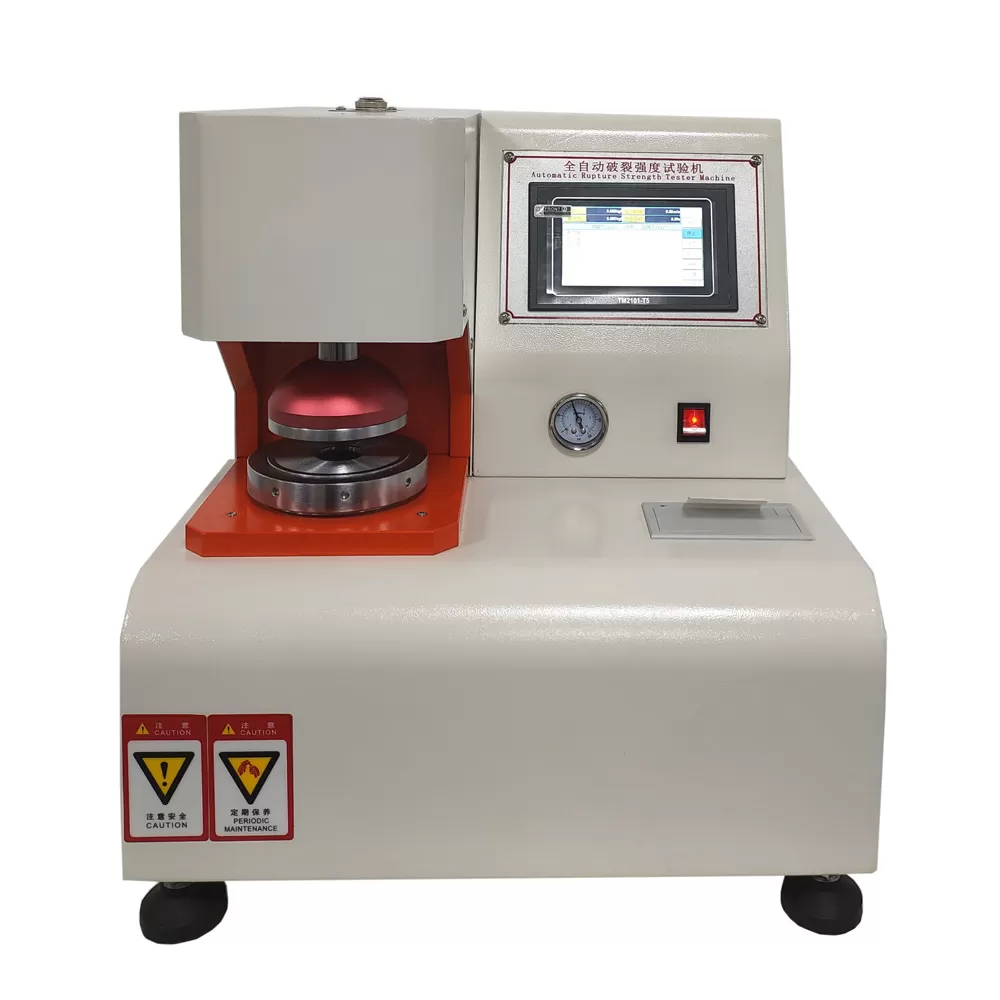
Burst strength measures a sheet’s multidirectional resistance to rupture under increasing hydraulic pressure. Regulated by ISO 2758 for paper and ISO 2759 for paperboard, this metric simulates multidirectional stresses encountered when bulk contents push against container walls.
During testing, a circular specimen is clamped over an elastic rubber diaphragm. Hydraulic fluid pumps into the pressure chamber at a constant volume rate, expanding the diaphragm against the paper until failure occurs. The maximum pressure readout—minus the tare diaphragm resistance pressure—yields the net bursting strength in kilopascals (kPa). High bursting indices require long-staple virgin softwood pulp with optimized inter-fiber hydrogen bonding.
Compressive Strength Mechanics
Compression resistance dictates the structural load-bearing capacity of corrugated boxes and fiber drums. Because paper structures are thin, compressive forces frequently cause elastic buckling rather than pure material crushing. Evaluated parameters include:
Short Span Compression Test (SCT): Conducted per ISO 9895 or TAPPI T 826, SCT measures the compressive strength of a paper sheet over an extremely short clamping distance (typically 0.70 mm). This microscopic gap prevents global buckling, isolating the true compressive load capacity of the cellulose fibers.
Ring Crush Test (RCT): Standardized by ISO 12192, RCT evaluates a 152.4 mm long strip formed into a cylindrical channel. While historically prevalent, RCT is sensitive to specimen preparation defects and edge-delamination.
Corrugated Medium Test (CMT): Evaluates the flat crush resistance of lab-fluted paperboard strips, measuring the load-bearing capacity of fluted flutes prior to box assembly.
Surface Properties and Absorptive Behavior
Converting operations require precise surface properties to ensure uniform ink receptivity, glue adhesion, and liquid barrier functionality.
Cobb Water Absorption Index (ISO 535 / TAPPI T 441): Quantifies the mass of water absorbed by a 100 cm² surface area over a defined duration (typically 60 or 120 seconds). The resultant value ($g/m^2$) dictates hydrophobic sizing efficiency.
Air Permeability and Roughness: Measured using Bendtsen, Gurley, or Sheffield instruments to quantify air leakage rates across compressed surface gaskets, indicating sheet porosity and printability.
Application Matrix Across Converting and Packaging Sectors
Different industrial applications prioritize distinct physical properties. Testing regimes must mirror the mechanical forces experienced throughout the product lifecycle.
Corrugated Box Manufacturing
Corrugated container performance relies on the structural contribution of containerboard liners and fluting mediums. Stacking durability is estimated using empirical models like the McKee formula, which calculates compressive resistance based on Edge Crush Test (ECT) results, flexural stiffness, and box perimeter dimensions. Modern automated testing instruments evaluate linerboard SCT, fluting CMT, and combined board ECT to ensure finished boxes withstand top-load compression in cold storage and high-humidity warehousing.
Folding Cartons and Flexible Paper Packaging
Consumer folding cartons undergo rapid mechanical creasing, folding, and gluing. Bending stiffness (ISO 2493) and crease recovery resistance determine whether packaging blanks run smoothly on high-speed cartoning equipment without bulging or panel deformation. In flexible paper packaging—such as multiwall sacks—high tensile energy absorption (TEA) prevents tears during drop impacts and pneumatic bag filling operations.
Mechanical Architecture and Data Acquisition Standards
Selecting a versatile paper testing machine requires evaluating load sensor resolution, frame rigidity, micro-displacement control, and software algorithm compliance. Precision instrument manufacturers like HAOEN integrate high-precision load cells and proprietary control interfaces to eliminate system flexure and signal latency during low-force measurements.
Load Cell Sensitivity and Dynamic Range: High-resolution 24-bit analog-to-digital converters (ADC) capture subtle load variations in light basis weight papers (e.g., 18 $g/m^2$ tissue) while offering sufficient capacity for heavy triple-wall corrugated boards.
Pneumatic Clamping Mechanics: Constant-pressure pneumatic grips eliminate specimen slippage and localized crushing caused by inconsistent manual clamping torque. Rubber-faced or parallel-serrated jaw profiles maintain uniform pressure across the entire clamp area.
Micro-Displacement Drive Systems: Zero-backlash ball screws paired with precision stepper or servo motor drives ensure constant elongation speeds compliant with international standards, minimizing speed fluctuation under varying load resistance.
Data Acquisition Interfaces: Integrated software platforms calculate rupture points, strain energy, standard deviations, and modulus slopes automatically while storing historical data for Statistical Process Control (SPC) analysis.
Methodological Analysis for Testing Discrepancies
Discrepancies in paper strength data between testing laboratories often stem from environmental factors, mechanical misalignment, or specimen preparation variance rather than intrinsic instrument errors. Implementing standard operating procedures guarantees reproducible measurement outcomes across facilities.
Atmospheric Conditioning Requirements
Cellulose fiber is a hygroscopic natural polymer. Ambient moisture acts as a plasticizer within the amorphous regions of cellulose, drastically modifying tensile, tear, and burst properties. Standard atmosphere parameters established by ISO 187 and TAPPI T 402 mandate:
Standard Temperature: $23^{\circ}C \pm 1.0^{\circ}C$
Standard Relative Humidity: $50\% \pm 2.0\% RH$
Prior to physical testing, specimens must undergo pre-conditioning at lower humidity levels (10% to 35% RH) followed by full equilibration in standard atmospheric conditions for a minimum of 24 hours. Failure to achieve equilibrium invalidates physical test data.
Specimen Edge Integrity and Precision Cutting
Microscopic burrs, ragged edges, or non-parallel cuts act as stress concentration points, inducing premature failure during tensile and SCT tests. Utilizing double-blade pneumatic strip cutters or precision rotary punch dies prevents micro-fissures, ensuring that every paper testing machine delivers reproducible data across multiple production batches.
Selecting Equipment for Laboratory and Line-Side Testing
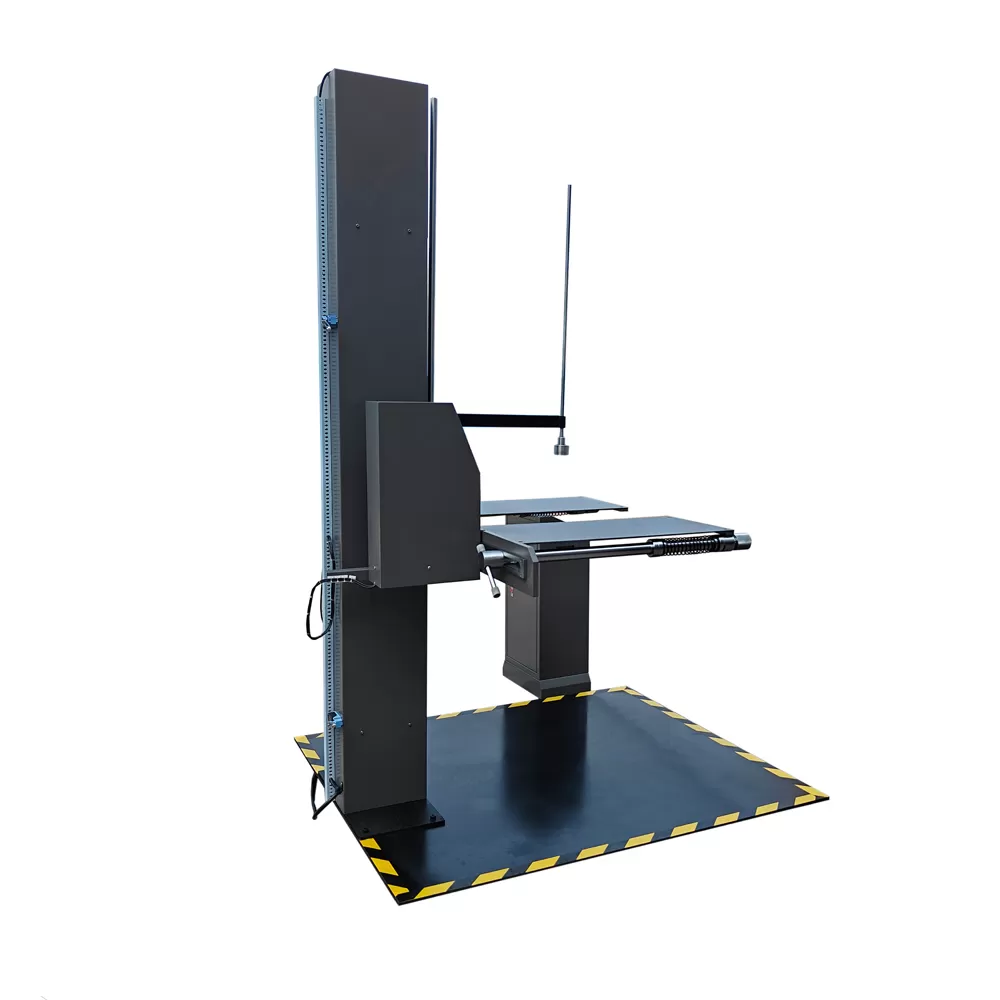
Facilities must match testing capabilities with operational requirements. Laboratory-grade universal testing systems provide comprehensive analytical depth, while compact line-side units enable rapid pass/fail verification directly on the production floor.
Systems developed by HAOEN offer modular expansion slots and multi-head sensor configurations, allowing mills to evaluate tensile, compression, tear, and burst resistance on a single master console. Modernizing quality control infrastructure improves raw material efficiency, reduces off-spec scrap rates, and ensures full transparency during supplier compliance audits.
Frequently Asked Questions
How often should load cells and sensors in testing instruments undergo calibration?
Load cells, pressure transducers, and micro-displacement gauges require formal ISO/IEC 17025 accredited calibration at least once per year. In high-throughput industrial facilities running 24/7 testing schedules, bi-annual verification using certified reference weights and secondary calibration foils is recommended to monitor sensor drift.
What distinguishes Bursting Strength from Puncture Resistance?
Bursting strength measures the multidirectional hydraulic pressure required to rupture a flat paper surface held under a flexible diaphragm. Puncture resistance measures the total energy absorbed by a heavy paperboard or corrugated board when a standardized pyramid-shaped point penetrates the material, combining tear, tensile, and puncture energy metrics.
Why is relative humidity conditioning mandatory prior to operating a paper testing machine?
Operating a paper testing machine without proper conditioning produces unreliable metrics because cellulose absorbs or desorbs environmental moisture rapidly. High humidity increases break elongation while reducing tensile strength and compressive stiffness; low humidity causes embrittlement, artificially inflating stiffness values while lowering tear resistance.
How does Short Span Compression Testing (SCT) compare to traditional Ring Crush Testing (RCT)?
SCT isolates the pure compressive strength of cellulose fibers across a 0.70 mm gap, eliminating the physical buckling artifacts that affect RCT. SCT demonstrates higher statistical correlation with finished corrugated container stacking strength and exhibits lower dependency on operator specimen preparation technique.
What maintenance steps prevent pneumatic clamp slippage during tensile testing?
Maintain consistent pneumatic line pressure via filtered, dry air supplies, periodically inspect rubber jaw inserts for wear or fiber buildup, and clean clamping surfaces with isopropyl alcohol to remove clay coatings, sizing agents, and fine particulate debris.
Request a Customized Technical Evaluation
Selecting appropriate material testing equipment requires matching mechanical capabilities, load capacities, and software routines to your exact operational protocols. HAOEN provides complete technical assistance, calibration routines, and modular instrument platforms tailored to pulp, paper, and package converting requirements globally.
For custom instrument configurations, ISO/TAPPI standard compliance consultation, or detailed pricing estimates, contact our application engineers directly at 13631787342 @163.com to discuss your testing requirements.