
The selection and application of appropriate plastic testing instruments directly influence material verification, production consistency, and end-use performance validation. For polymer processors, compounders, and quality assurance laboratories, understanding the operational principles, standard methodologies, and data interpretation protocols associated with each instrument category remains fundamental to effective quality management. This technical overview examines the principal classes of plastic testing instruments, their measurement parameters, applicable standards, and the practical considerations that govern instrument selection across diverse industrial applications.
The Fundamental Categories of Plastic Testing Instruments
Plastic testing instruments encompass a broad spectrum of measurement technologies, each designed to quantify specific material characteristics. The classification of these instruments typically follows the physical property being assessed, with distinct instrument families addressing mechanical, thermal, rheological, and environmental performance parameters. This categorical approach enables laboratories to systematically evaluate material suitability for targeted applications while maintaining alignment with international testing standards.
Mechanical Property Testing Instruments
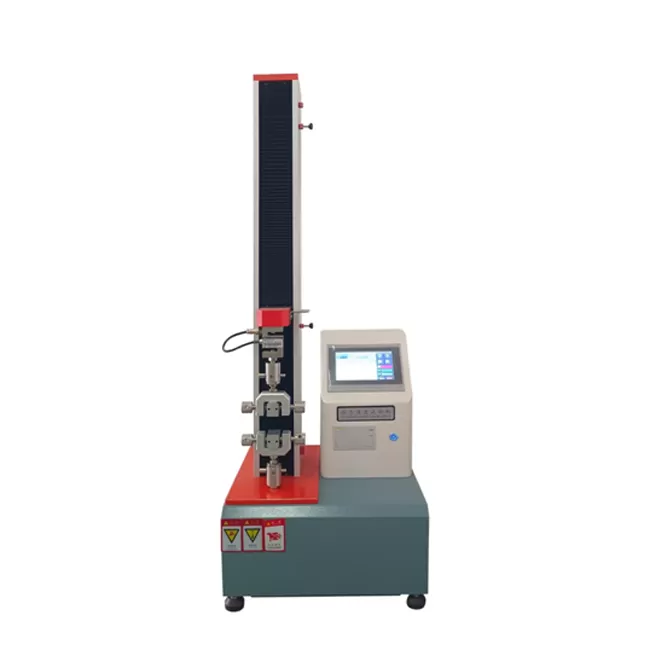
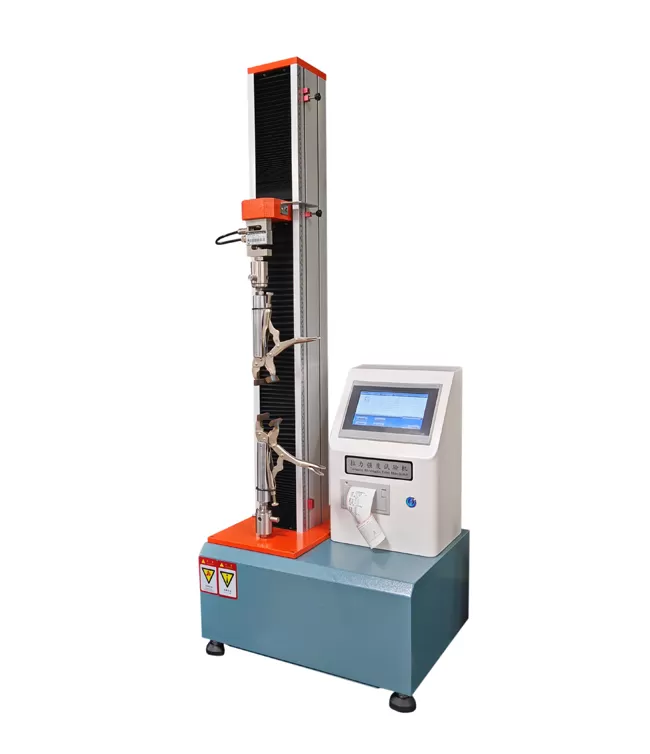
Mechanical property evaluation constitutes the most frequently performed category of plastic testing, providing critical data on material strength, stiffness, toughness, and durability under applied loads. Universal testing machines (UTMs) represent the cornerstone of mechanical testing, capable of conducting tensile, compression, flexural, and peel tests through interchangeable grips, fixtures, and load cells. These instruments typically operate with crosshead speeds ranging from 0.1 to 500 mm/min, accommodating both quasi-static and dynamic loading conditions.
Impact testing instruments, including Izod and Charpy pendulum impact testers, measure material resistance to sudden loading, providing essential data for applications subject to incidental impact or drop loads. The instrumentation for impact testing incorporates calibrated pendulums with specified energy capacities, specimen anvils, and digital angle measurement systems that compute absorbed energy from the difference between initial and rebound swing heights. For ductile materials that do not fracture completely, these instruments often incorporate displacement transducers to capture the complete force-deflection history.
Hardness testing instruments for plastics employ distinct methodologies, including Shore durometers for elastomeric and soft materials, Rockwell hardness testers for rigid plastics, and micro-indentation systems for thin films and coatings. The selection among these instrument types depends on material thickness, surface condition, and the specific hardness scale required by the applicable standard, such as ASTM D2240 for Shore hardness or ISO 2039 for Rockwell testing.
Thermal Property Testing Instruments
Thermal characterization instruments provide crucial data on polymer transition temperatures, thermal stability, and heat resistance under service conditions. Differential scanning calorimetry (DSC) instruments measure heat flow into or out of a sample as a function of temperature or time, enabling determination of glass transition temperature (Tg), melting temperature (Tm), crystallization temperature (Tc), and oxidative induction time (OIT). Modern DSC instruments incorporate modulated temperature capabilities, allowing separation of reversing and non-reversing thermal events, which proves particularly valuable for analyzing complex polymer blends and semi-crystalline materials.
Thermogravimetric analysis (TGA) instruments continuously monitor sample mass change under controlled temperature programs, providing quantitative data on filler content, decomposition temperature, and volatile component levels. The coupling of TGA with evolved gas analysis through FTIR or mass spectrometry extends the analytical capability to identify specific decomposition products, supporting forensic failure analysis and material verification studies.
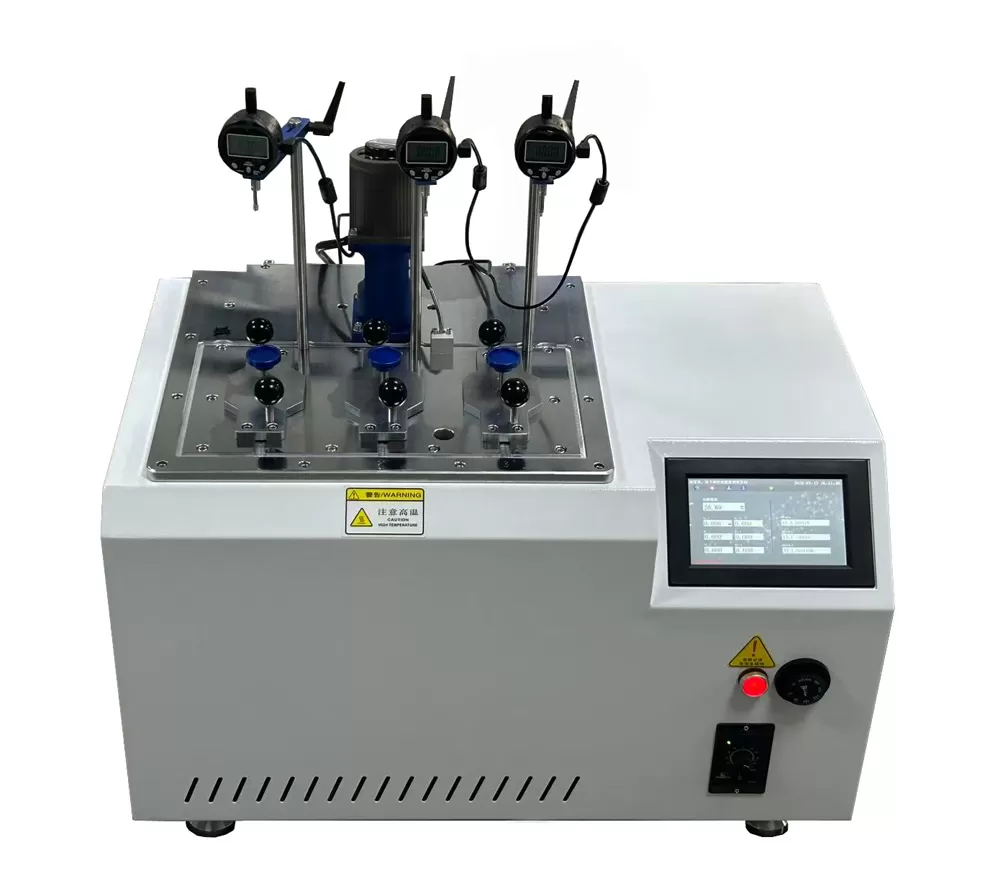
Heat deflection temperature (HDT) and Vicat softening temperature testers evaluate thermal resistance under load, with HDT instruments measuring deformation at specified fiber stress levels while Vicat testers determine the temperature at which a standard needle penetrates the specimen to a defined depth. These instruments typically operate in oil baths or air circulating ovens with controlled heating rates, providing essential data for material selection in elevated temperature applications.
Rheological and Flow Property Testing Instruments
Flow behavior characterization through rheological instruments addresses the processing behavior of plastic materials, providing essential data for injection molding, extrusion, and blow molding operations. Melt flow index (MFI) testers, also referred to as melt volume rate (MVR) instruments, measure the flow rate of molten polymer through a standardized die under specified temperature and load conditions. These instruments incorporate temperature controllers with precision of ±0.1°C, interchangeable dies, and weight systems that apply the designated load to the piston. For quality control laboratories, MFI instruments serve as rapid screening tools for verifying material consistency and detecting degradation or contamination.
Capillary rheometers extend the flow characterization capability across a range of shear rates, providing data on shear viscosity, extensional viscosity, and melt elasticity. These instruments employ controlled piston displacement through a capillary die while measuring pressure drop and flow rate, enabling construction of complete flow curves. The data generated from capillary rheometers correlate more directly with actual processing conditions than standard MFI measurements, supporting scientific molding and process optimization efforts.
Torque rheometers, commonly configured as internal mixers or twin-screw compounders with torque sensors, characterize the flow behavior of filled and unfilled polymer compounds under processing conditions. These instruments measure the torque required to rotate mixing elements through the polymer melt, providing data on processability, thermal stability, and the effectiveness of processing aids.
Environmental and Aging Resistance Testing Instruments
Environmental testing instruments evaluate the resistance of plastic materials to degradation under exposure to ultraviolet radiation, moisture, temperature extremes, and chemical environments. Weathering testers, including xenon arc and fluorescent UV instruments, subject specimens to accelerated aging cycles that simulate outdoor exposure conditions. These instruments control irradiance, temperature, and relative humidity according to standard test methods such as ASTM G155 and ISO 4892, enabling comparative assessment of material weatherability and formulation effectiveness.
Humidity chambers and environmental chambers provide controlled temperature and humidity conditions for testing moisture absorption, dimensional stability, and hygroscopic effects on mechanical properties. The instrumentation for humidity testing requires precise control of relative humidity across the range of 20% to 98%, with uniformity across the chamber volume to ensure consistent exposure of all specimens.
Oxygen permeation and water vapor transmission rate testers quantify the barrier properties of plastic films and containers, essential for packaging applications. These instruments employ pressure differential, concentration gradient, or sensor-based methodologies to measure permeation rates, providing data that directly influences packaging design and shelf-life predictions.
Critical Parameters and Measurement Standards
The operation of plastic testing instruments requires strict adherence to established testing standards to ensure data reproducibility and comparability across laboratories. International standards from ISO, ASTM, and national standardization bodies define specimen preparation procedures, conditioning requirements, test speeds, and reporting formats for each measurement type. Specimen preparation itself represents a significant source of variability, with injection molding, compression molding, and machining techniques producing specimens with potentially different residual stresses and morphological characteristics. Testing laboratories must carefully control conditioning temperature and humidity according to standard requirements, typically 23°C ± 2°C and 50% ± 5% relative humidity for general testing.
Calibration and verification procedures for plastic testing instruments involve the use of certified reference materials, standardized weights, displacement gauges, and temperature sensors traceable to national measurement standards. The frequency of calibration depends on instrument usage, environmental conditions, and the criticality of the measurements being performed. For plastic testing instruments used in production quality control, daily verification with internal standards or control charts provides continuous monitoring of instrument performance and detects drift before it affects product acceptance decisions.
Industry-Specific Applications and Instrument Selection
The selection of plastic testing instruments depends significantly on the target application and the property requirements defined by the end-use environment. Automotive applications typically demand comprehensive mechanical testing including tensile, flexural, impact, and hardness measurements, complemented by thermal analysis to verify heat resistance and long-term aging characteristics. Packaging applications emphasize barrier property testing, optical clarity measurement, and seal strength evaluation, with instruments including permeation testers, haze meters, and peel testers configured for film and sheet specimens.
Medical device applications impose stringent requirements on biocompatibility, sterilization resistance, and material purity, driving the need for advanced thermal analysis, extractables characterization, and mechanical property verification following sterilization cycles. Plastic testing instruments employed in medical device quality assurance must comply with applicable regulations and often require validation of measurement procedures to demonstrate analytical accuracy and precision.
Electrical and electronic applications focus on dielectric properties, flammability rating, and dimensional stability, with instruments for volume resistivity, surface resistivity, dielectric breakdown voltage, and tracking resistance forming the core testing capability. The selection of appropriate plastic testing instruments for these applications requires careful consideration of specimen geometry, conditioning requirements, and the specific test procedures defined in relevant standards.
Quality Assurance Protocols and Data Interpretation
Effective quality assurance programs incorporate plastic testing instruments at multiple points in the production chain, from incoming material verification to final product release. Raw material testing confirms that incoming polymer shipments meet specification limits for melt flow index, tensile properties, and thermal characteristics, providing early detection of off-specification materials before they enter production. In-process monitoring through rheological and thermal testing enables detection of degradation, compositional variations, or processing problems that could affect product quality.
Data interpretation from plastic testing instruments requires understanding of material behavior, measurement uncertainty, and statistical process control principles. The presence of outliers in mechanical testing data often indicates specimen preparation defects, grip slippage, or material inhomogeneity rather than genuine material property variation. Laboratories employing plastic testing instruments should implement documented procedures for data validation, outlier identification, and reporting of measurement uncertainty to ensure that quality decisions are based on reliable data.
HAOEN provides comprehensive support for laboratories implementing plastic testing instruments, including instrument selection guidance, training programs, and calibration services that maintain measurement accuracy throughout the instrument lifecycle. The integration of plastic testing instruments into automated quality management systems streamlines data collection, report generation, and trend analysis, enabling proactive quality management rather than reactive defect detection.
Common Challenges in Plastic Testing and Instrument Solutions
Testing laboratories encounter several recurring challenges when employing plastic testing instruments for routine quality control and material characterization. Specimen preparation variability remains a primary source of measurement inconsistency, with differences in molding conditions, cooling rates, and annealing procedures producing specimens with distinct morphological characteristics that affect test results. Standardized specimen preparation protocols and conditioning procedures address these challenges, but require careful implementation and periodic verification to maintain effectiveness.
Temperature control during testing presents particular challenges for thermal and rheological measurements, where small temperature deviations produce significant changes in measured properties. Modern plastic testing instruments incorporate advanced temperature control systems with multiple sensors, proportional-integral-derivative (PID) algorithms, and thermal mass optimization to maintain temperature stability within ±0.1°C across the measurement zone. Environmental chambers that control both temperature and humidity further reduce variability in mechanical testing by maintaining consistent conditioning throughout the measurement period.
Data comparability across different plastic testing instruments and laboratories requires the use of common reference materials, inter-laboratory comparison programs, and standardized reporting protocols. HAOEN supports these efforts through the provision of certified reference materials and participation in proficiency testing programs that validate measurement competence across the testing community.
Frequently Asked Questions About Plastic Testing Instruments
What are the essential plastic testing instruments for a quality control laboratory?
A quality control laboratory focused on plastic materials typically requires a universal testing machine for tensile and flexural properties, an impact tester for Izod or Charpy impact resistance, a melt flow index tester for flow property verification, and a hardness tester appropriate for the materials being evaluated. Thermal analysis instruments, including DSC and TGA, provide valuable supplementary data for material verification and problem-solving applications. The specific instrument configuration depends on the material types, product applications, and testing standards applicable to the laboratory's operations.
How often should plastic testing instruments be calibrated?
Calibration frequency for plastic testing instruments depends on usage intensity, environmental conditions, and the criticality of the measurements being performed. General practice recommends annual calibration for most instruments, with verification checks performed daily or weekly using certified reference materials or check specimens. High-usage instruments in production quality control environments may require more frequent calibration, while instruments used infrequently for research purposes may maintain calibration for longer periods with appropriate verification.
What standards govern plastic testing instrument operation?
International standards from ISO and ASTM provide the primary framework for plastic testing instrument operation. ISO 527 and ASTM D638 cover tensile testing of plastics, ISO 179 and ASTM D256 address impact testing, ISO 1133 and ASTM D1238 specify melt flow rate measurement, and ISO 75 and ASTM D648 define heat deflection temperature testing. Additional standards address conditioning, specimen preparation, and reporting requirements that complement the instrument-specific standard test methods.
How do specimen preparation methods affect testing results?
Specimen preparation methods significantly influence testing results through their effects on polymer morphology, residual stress, and surface condition. Injection-molded specimens exhibit orientation and skin-core structures that differ from compression-molded specimens, affecting tensile and impact properties. Machined specimens from compression-molded or extruded sheets may contain surface damage from cutting operations, reducing apparent strength values. Conditioning after preparation, including annealing and humidity equilibration, further affects measured properties and must be carefully controlled according to standard requirements.
What considerations guide the selection between different plastic testing instruments for the same property?
Instrument selection for a specific property measurement considers material type, specimen availability, required precision, applicable standards, and cost constraints. For impact testing, Izod and Charpy methods differ in specimen orientation and clamping arrangement, producing results that may not correlate directly. For hardness testing, Shore and Rockwell methods apply distinct principles and scales, with Shore more appropriate for soft materials and Rockwell suitable for rigid plastics. The decision between instrument types reflects the specific material characteristics, product requirements, and the historical data available for comparison purposes.
How does temperature affect plastic testing instrument measurements?
Temperature profoundly affects plastic material properties and measurement results, with most mechanical, thermal, and rheological properties exhibiting significant temperature dependence. Tensile strength and modulus typically decrease with increasing temperature, while impact resistance often increases near the glass transition temperature. Thermal testing instruments must precisely control and measure temperature to generate accurate transition temperatures and thermal stability data. Temperature control systems in plastic testing instruments must maintain specified conditions throughout the measurement period to ensure reproducible and reliable results.
What role does data management play in plastic testing operations?
Data management systems support plastic testing operations through automated data collection, calculation, and reporting functions that reduce human error and increase laboratory efficiency. Integrated software systems capture instrument readings, apply standard calculations, generate test reports, and maintain historical records for trend analysis and audit purposes. The effective management of testing data enables rapid identification of material variations, supports continuous improvement initiatives, and provides documentation for quality management systems and regulatory compliance requirements.
For laboratories seeking to upgrade or expand their plastic testing instrument capabilities, HAOEN offers comprehensive consultation services, equipment selection guidance, and technical support that ensures successful implementation and sustained measurement reliability. Contact our technical specialists to discuss your specific testing requirements and instrument configuration needs.